
How Ohio's Freeze-Thaw Cycles Destroy Driveways (And What to Do About It)
Every winter, Ohio's freeze-thaw cycles silently damage driveways from the inside out. Here's what's actually happening underground and what you can do about it before the damage gets worse.
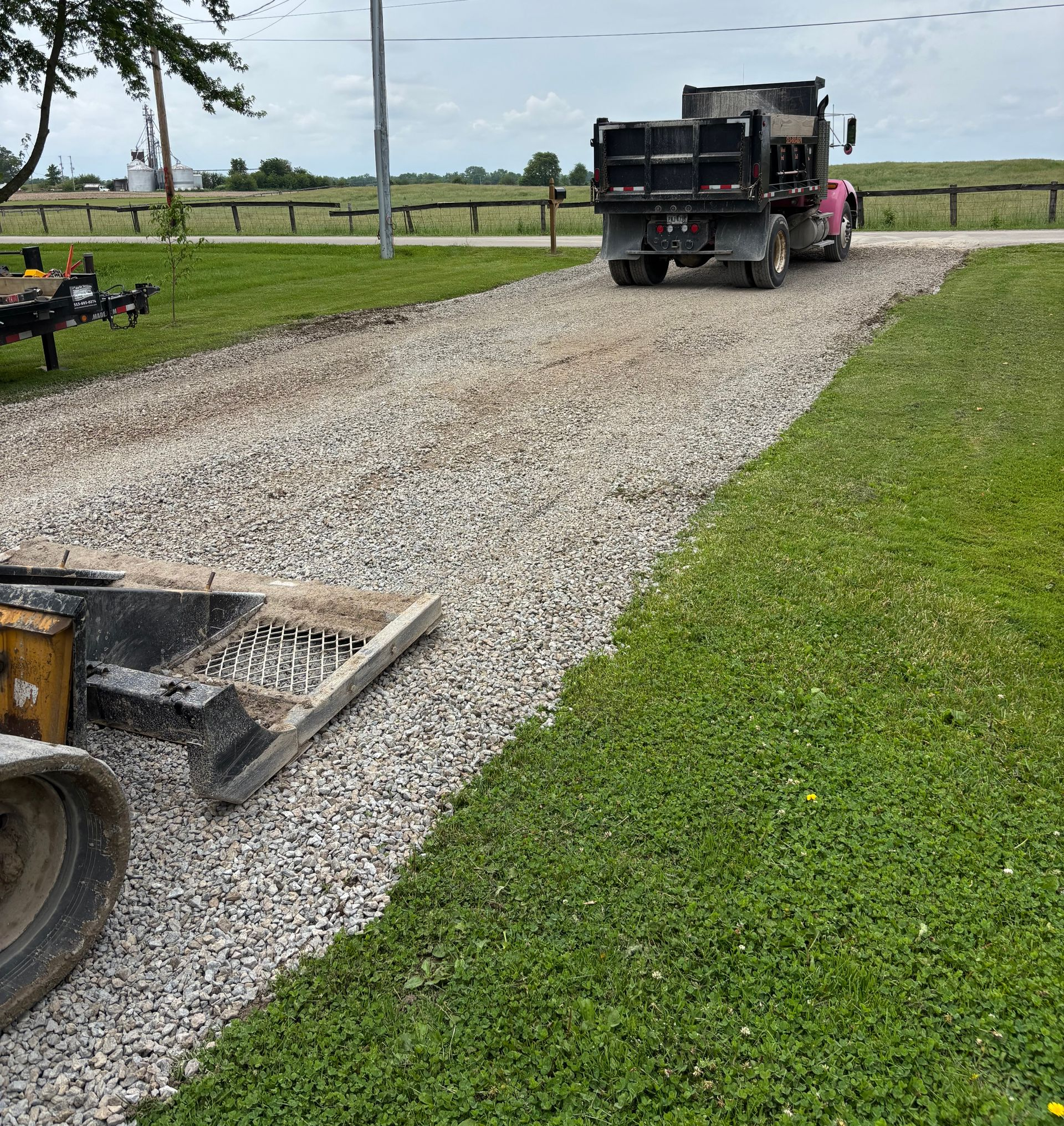
If your gravel driveway looks noticeably worse every spring, you're not imagining it. Ohio's freeze-thaw cycles are one of the most destructive forces a gravel driveway faces and most homeowners don't realize the damage is accumulating until it's already severe.
What Is a Freeze-Thaw Cycle?
A freeze-thaw cycle happens when temperatures drop below 32 degrees F overnight, then rise back above freezing during the day. In Southwest Ohio, this pattern can repeat 30 to 50 times between November and March. Every single cycle puts stress on your driveway.
Water from rain or snowmelt seeps into the base of your driveway. When temperatures drop, that water freezes and expands pushing gravel and soil upward. When it thaws, everything settles back down, but not in exactly the same place. Repeat that 40 times over a winter, and the damage adds up fast.
What Freeze-Thaw Cycles Do to Your Driveway
Potholes form as the base material heaves, then collapses into voids below
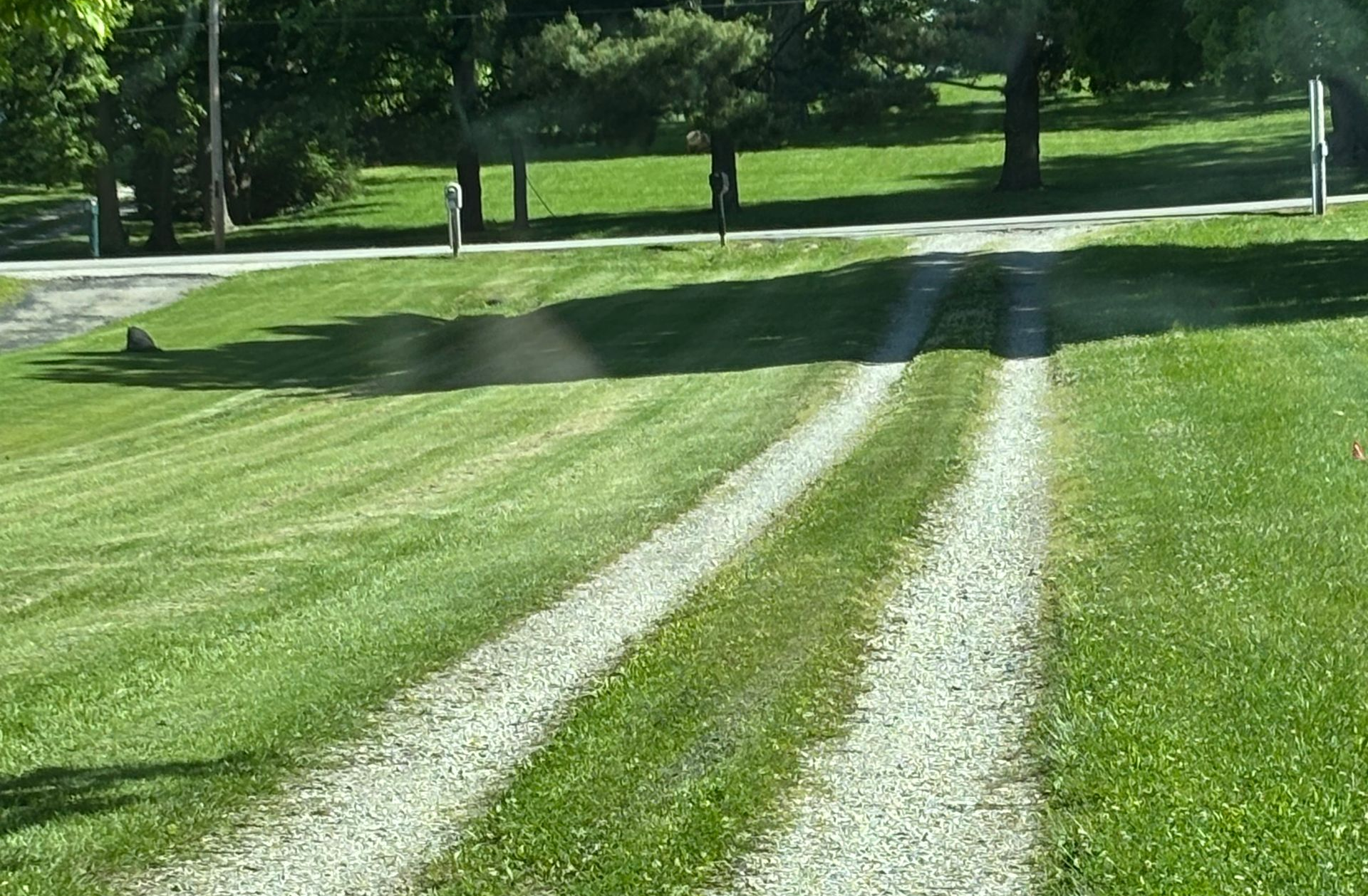
Ruts develop in wheel tracks where the base is repeatedly compromised
Gravel migrates to the edges and shoulders, leaving the center thin
Drainage problems worsen as the surface loses its crown and water pools
Soft spots develop where water is collecting and repeatedly freezing below grade
Why Poor Drainage Makes It Worse
Freeze-thaw damage is directly tied to how much water is sitting in your driveway base. A well-drained driveway sheds water quickly, so there's little to freeze. A driveway with poor drainage holds water in the base all winter and pays for it every spring.
Common drainage problems that accelerate freeze-thaw damage:
No crown (the center should be slightly higher than the edges so water runs off)
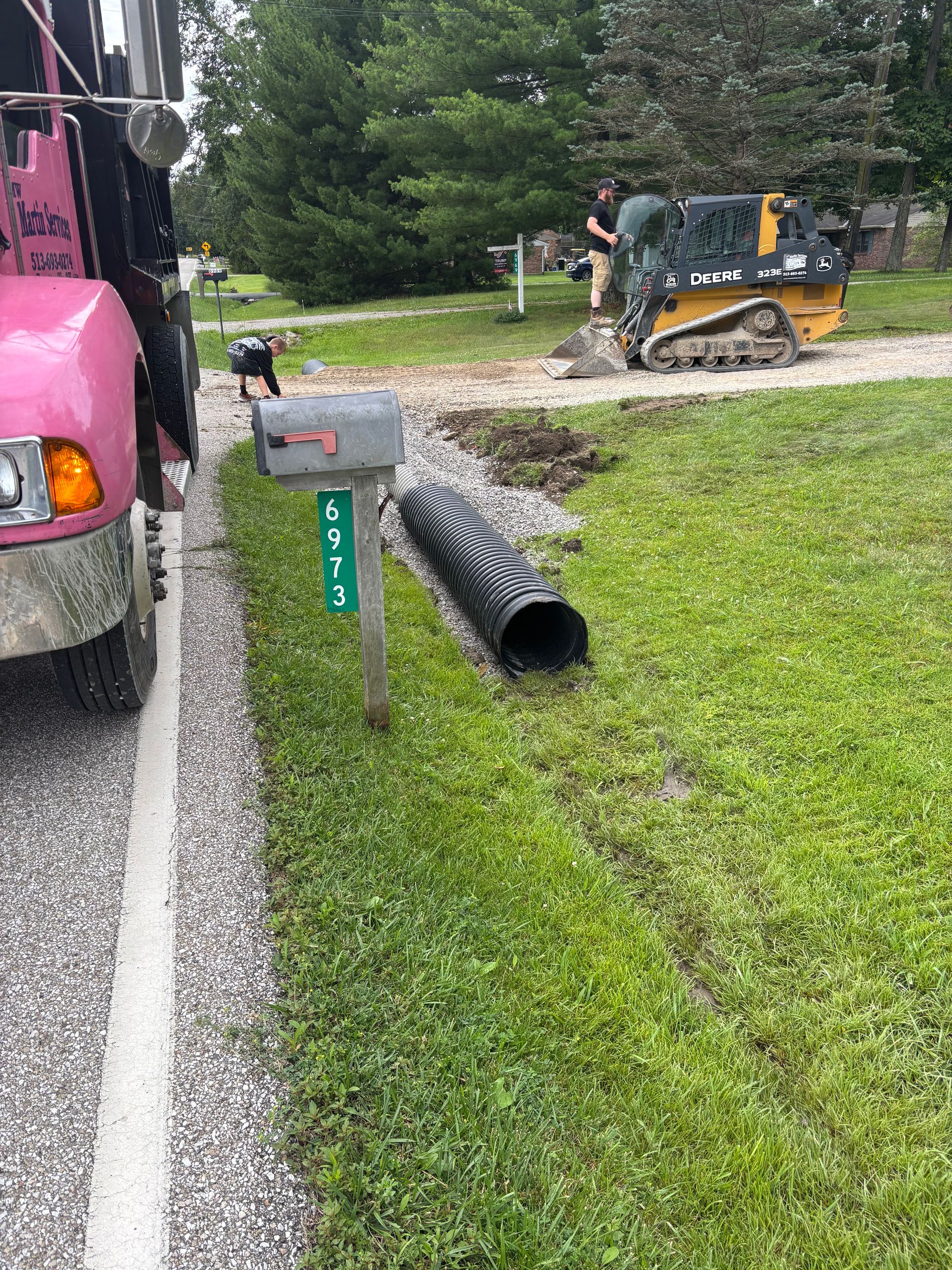
A clogged or failed culvert pipe at the road entrance, backing water up into the base
Low spots where water collects instead of draining away
A base that was never properly compacted, leaving voids where water sits
The Fix: What Actually Works
If your driveway is showing freeze-thaw damage, summer is the best time to fix it the ground is stable, conditions are dry, and you have months before the next freeze season begins.
MW Martin Services addresses freeze-thaw damage by:
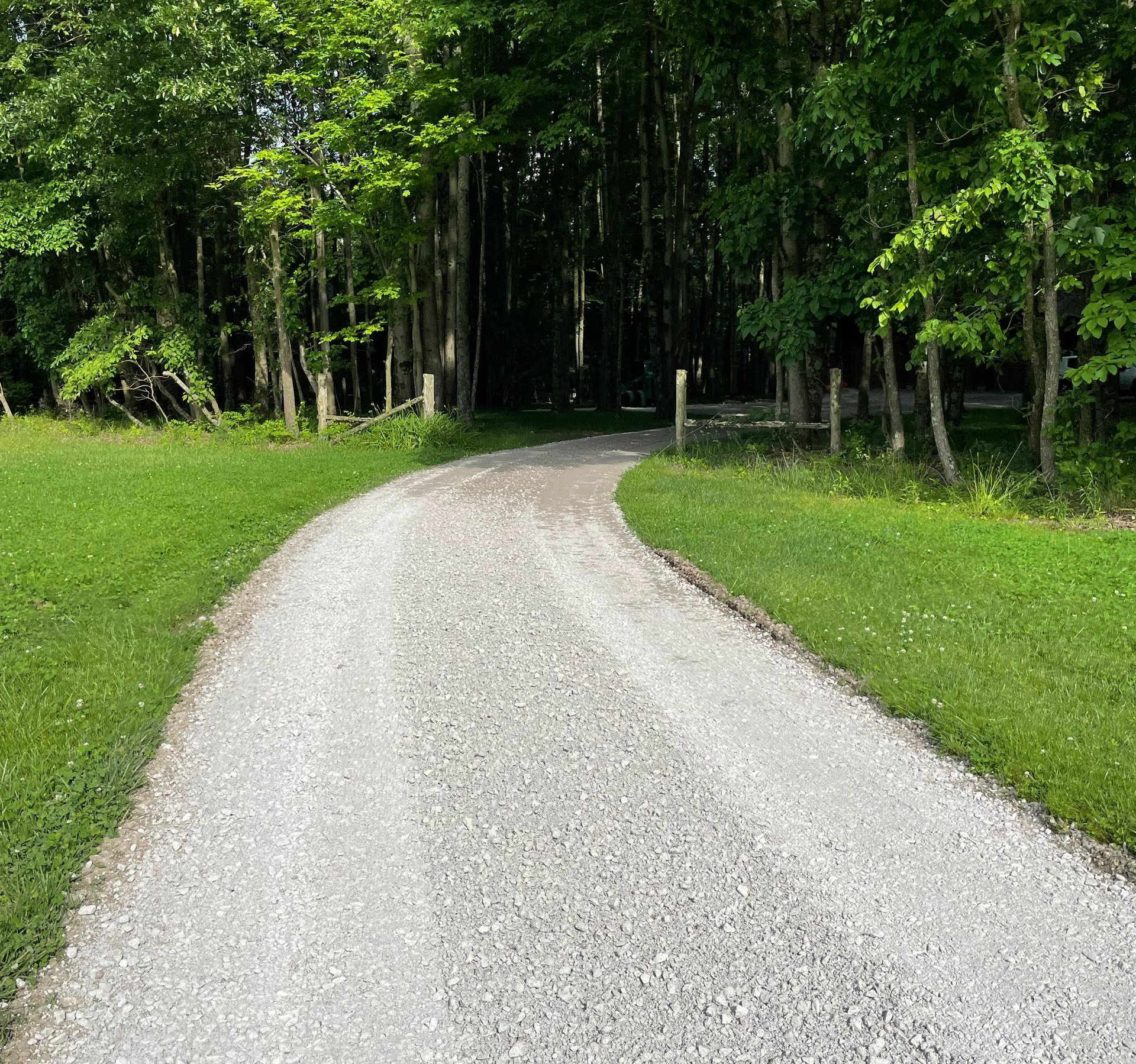
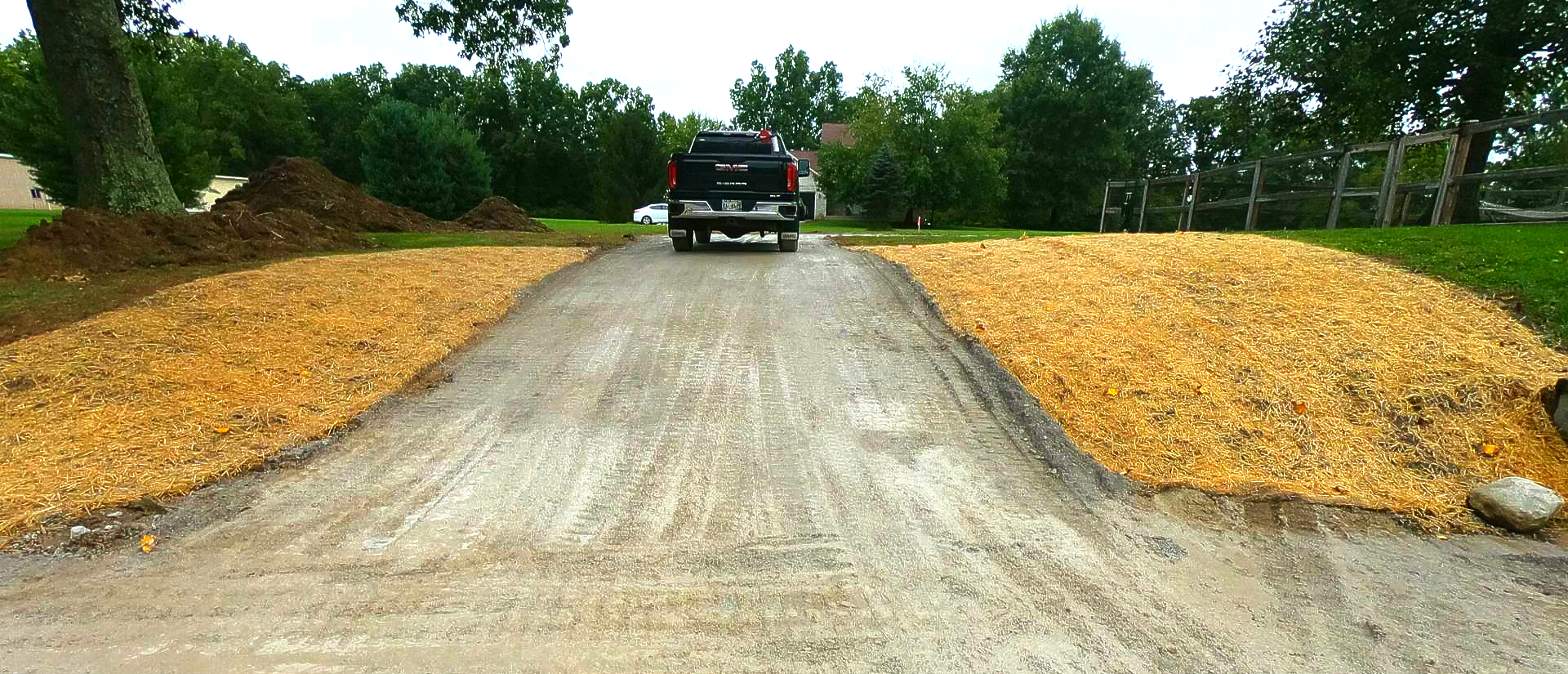
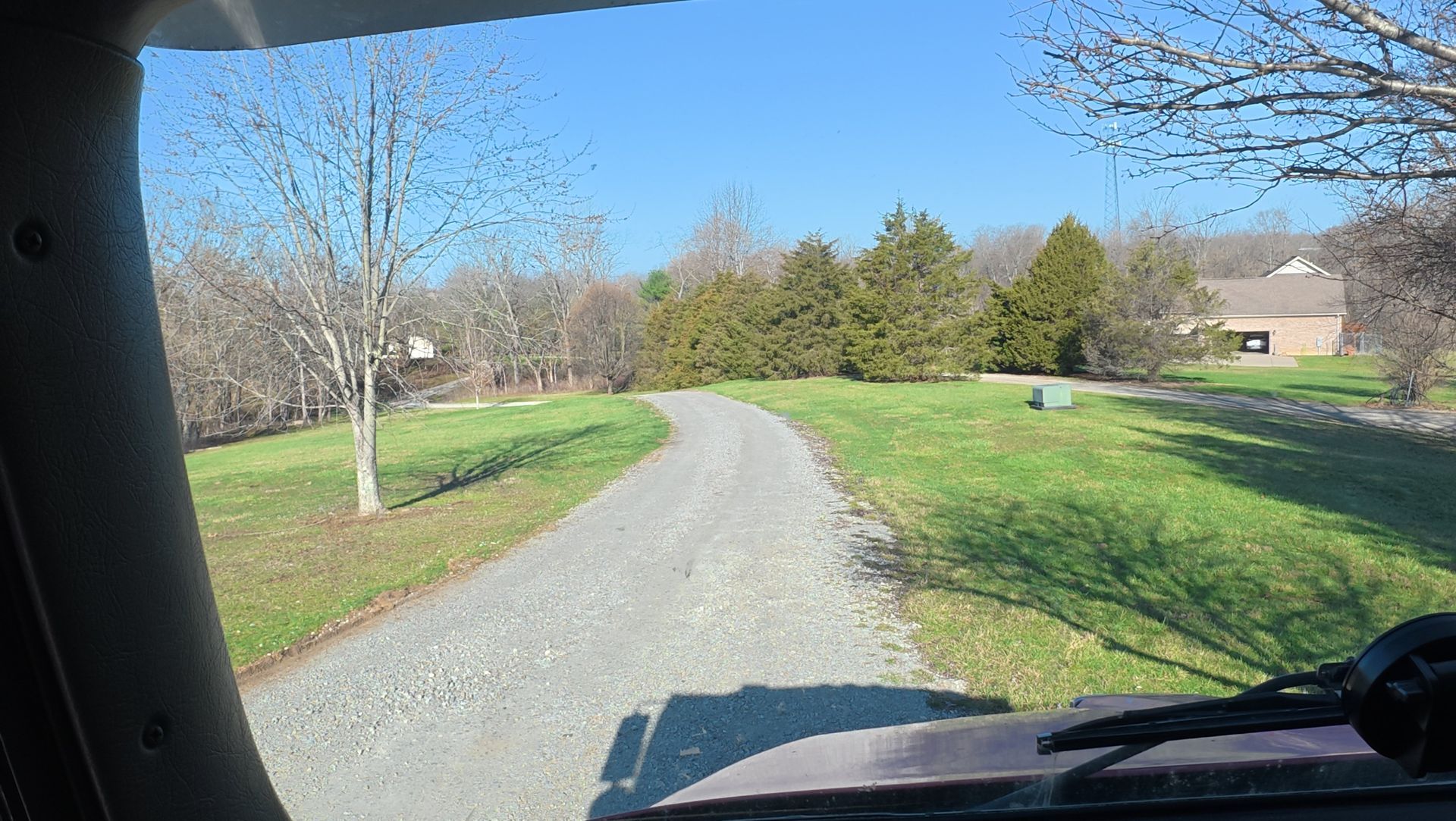
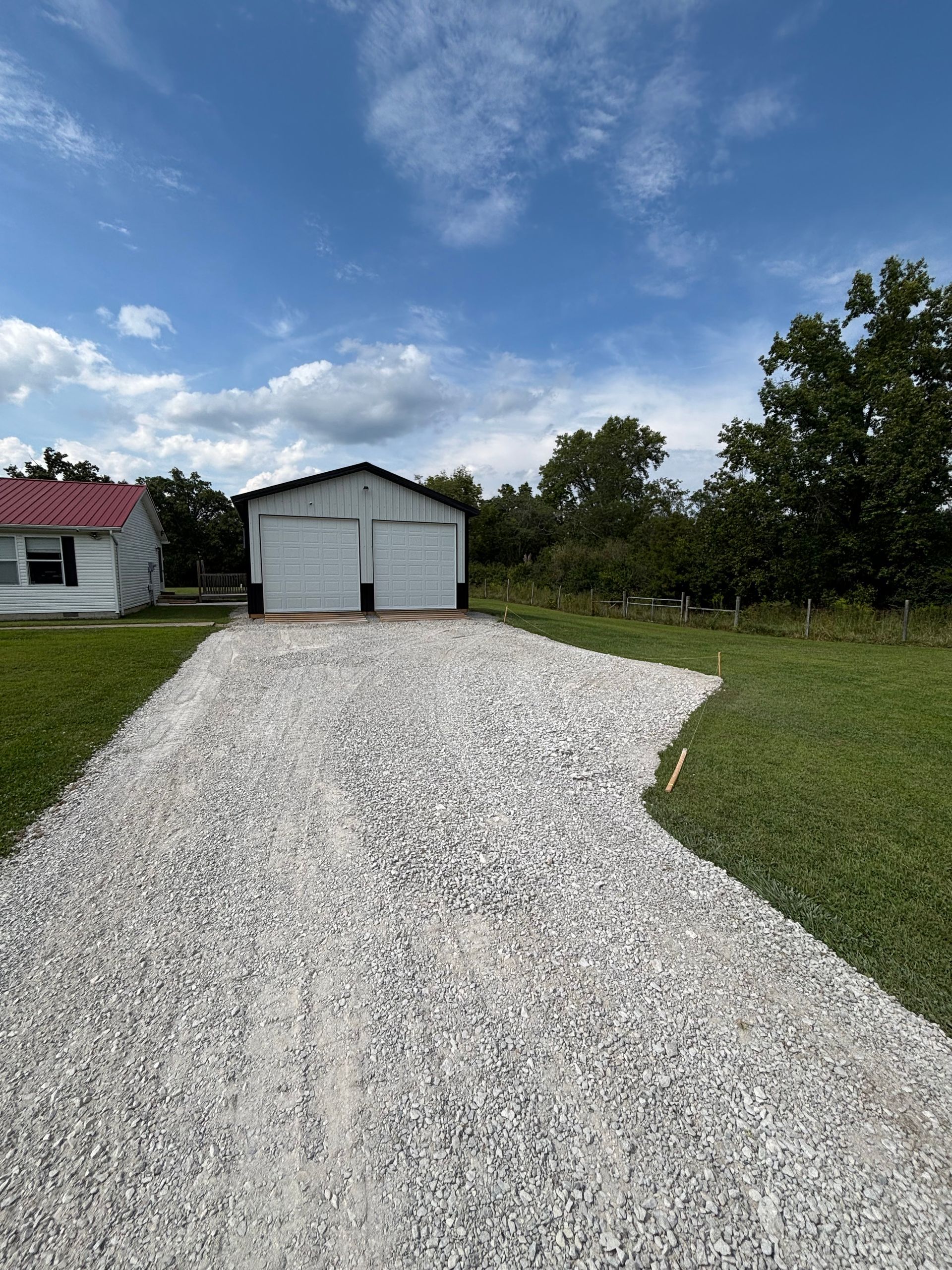
Regrading the Surface We regrade the driveway to restore proper crown and slope, so water runs off to the sides instead of sitting in the base.
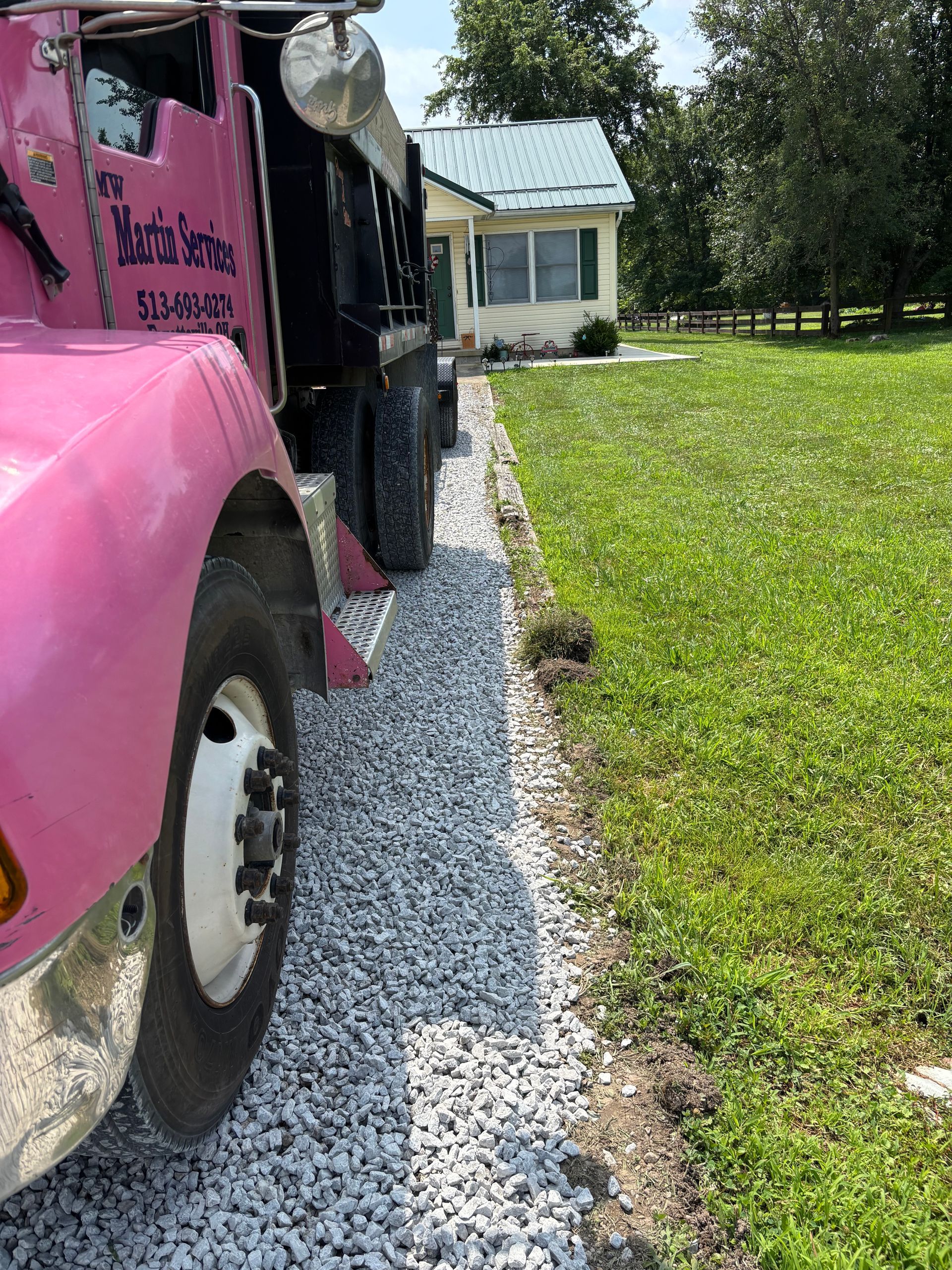
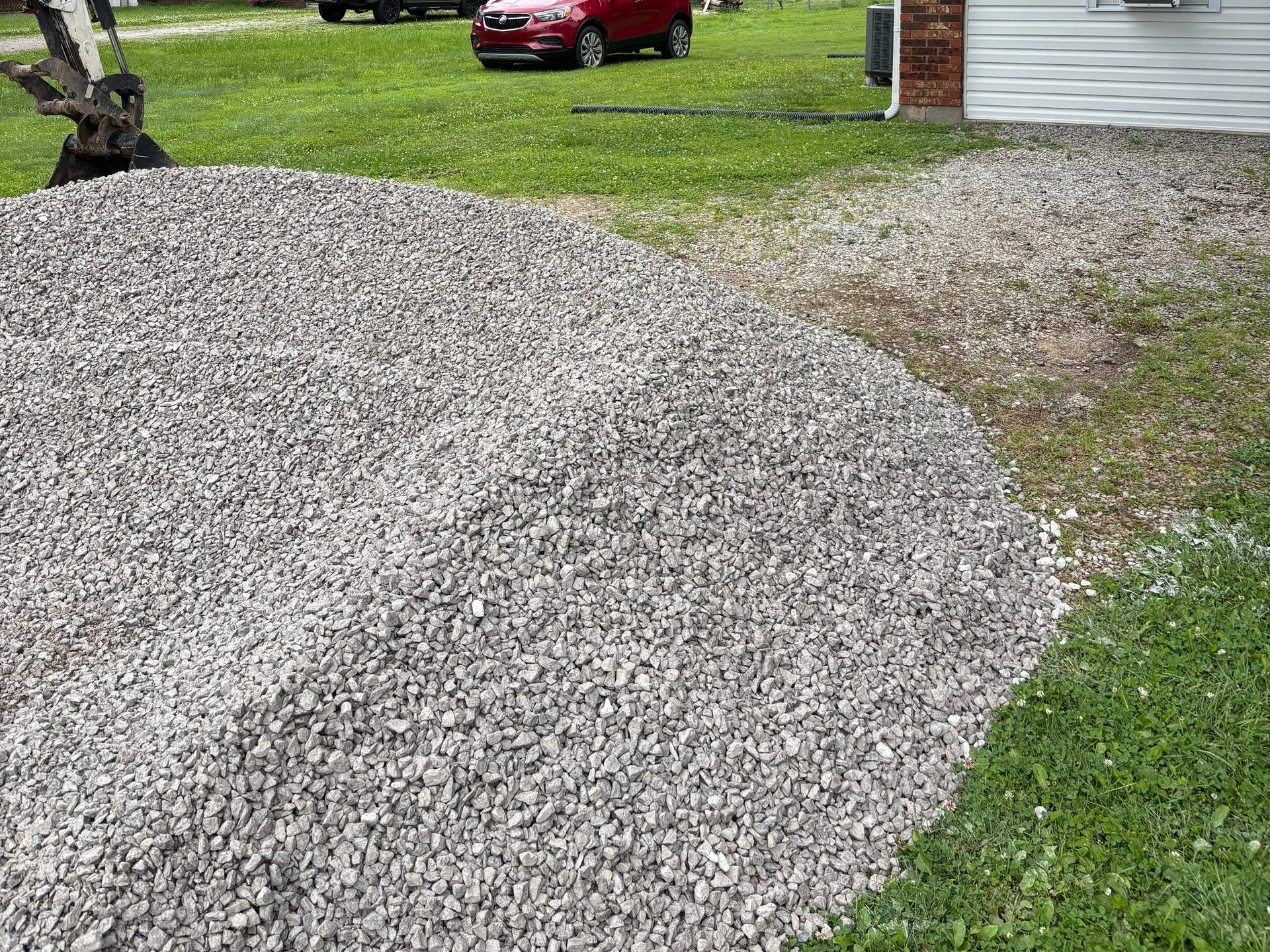
Adding Fresh Gravel We replenish gravel that has migrated to the edges or been ground down over time. #57 limestone is our go-to for topping because it drains well and stays put.
Addressing Drainage at the Source If a culvert pipe, ditch, or slope issue is allowing water to sit in your base, we fix the root cause so the damage doesn't come back next winter.
Compacting the Base For driveways with significant soft spots, we can bring in base material and compact it properly before topping.
Already Seeing Damage? Don't Wait.
Every additional freeze-thaw season on a damaged base makes the problem worse and more expensive to fix. Catching ruts and soft spots now before the base deteriorates further keeps repair costs manageable.
MW Martin Services provides gravel driveway repair and regrading throughout Southwest Ohio, including Fayetteville, Hillsboro, Lynchburg, Georgetown, Amelia, Milford, Wilmington, and Lebanon.
Call or text us for a free estimate. We'll take a look, tell you exactly what your driveway needs, and give you a straight price no pressure.
513-693-0274