
Culvert Replacement in Southwest Ohio: Why Old Pipes Fail and Why HDPE Is the New Standard
Culverts are one of the most important parts of a rural driveway — but they’re also one of the most overlooked. Most homeowners don’t realize their culvert is failing until the driveway starts washing out, sinking, or flooding after storms. In Southwest Ohio, older concrete and steel culverts are reaching the end of their lifespan, and many are now collapsing from age, rust, or erosion.
This guide explains why older culverts fail, what signs to look for, and why modern dual‑wall HDPE pipe is the best replacement option for long-term durability.

Why Older Culvert Pipes Fail
1. Concrete Culverts (RCP) — Cracking, Joint Separation & Collapse
Concrete culverts were installed heavily from the 1960s through the early 2000s. Over time, they begin to:
- crack from freeze/thaw cycles
- separate at the joints
- develop holes from abrasion
- allow soil to infiltrate through gaps
- lose structural strength and cave in
Once soil begins entering the pipe, voids form above it — eventually causing driveway collapse or sinkholes.
Concrete doesn’t rust, but it does deteriorate, especially when water carries sand and gravel across the pipe bottom. This abrasion slowly grinds the concrete away until holes form.


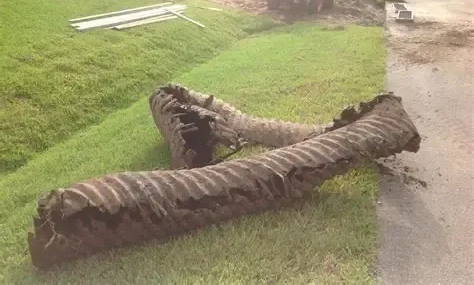
2. Steel Culverts — Rust, Rot & Complete Invert Failure
Steel culverts (CMP) are even more common in rural Ohio — and they fail faster.
Steel culverts typically rust from the inside out, especially along the bottom (invert) where water sits. Over time, you’ll see:
- rust holes
- flaking metal
- soft spots
- collapsed sections
- water cutting across the driveway
- soil washing into the pipe
Once the bottom rusts through, the pipe loses its shape and begins collapsing under the weight of the driveway.
Why Modern Culvert Replacements Use Dual‑Wall HDPE Pipe
Today, the industry standard for culvert replacement is Corrugated Dual‑Wall High Density Polyethylene (HDPE) pipe. It’s the same material used by ODOT, county engineers, and modern drainage systems.
Benefits of Dual‑Wall HDPE Culvert Pipe
- Will not rust or rot — ever
- Smooth interior improves water flow
- Corrugated exterior provides strength
- Rated for 75–100+ year service life
- Resists abrasion from sand and gravel
- Handles freeze/thaw cycles without cracking
- Lightweight for easier installation
- Stronger joints and better sealing
HDPE solves every failure mode of concrete and steel culverts.
Signs Your Culvert Needs Replaced
If you notice any of these, your culvert is failing:
- water crossing over the driveway
- washed-out edges
- sinking or soft spots
- holes in the pipe
- rust flakes or missing metal
- concrete cracking or breaking
- driveway flooding after storms
- pipe no longer carrying water properly
If the culvert is collapsing, replacement is the only long-term fix.
How MW Martin Services Replaces a Culvert (Step-by-Step)
1. Site Evaluation
We inspect:
- pipe condition
- water flow direction
- driveway height
- drainage needs
- soil conditions
- culvert length and diameter
This ensures the new pipe is sized correctly and installed to prevent future washouts.
2. Excavation & Removal
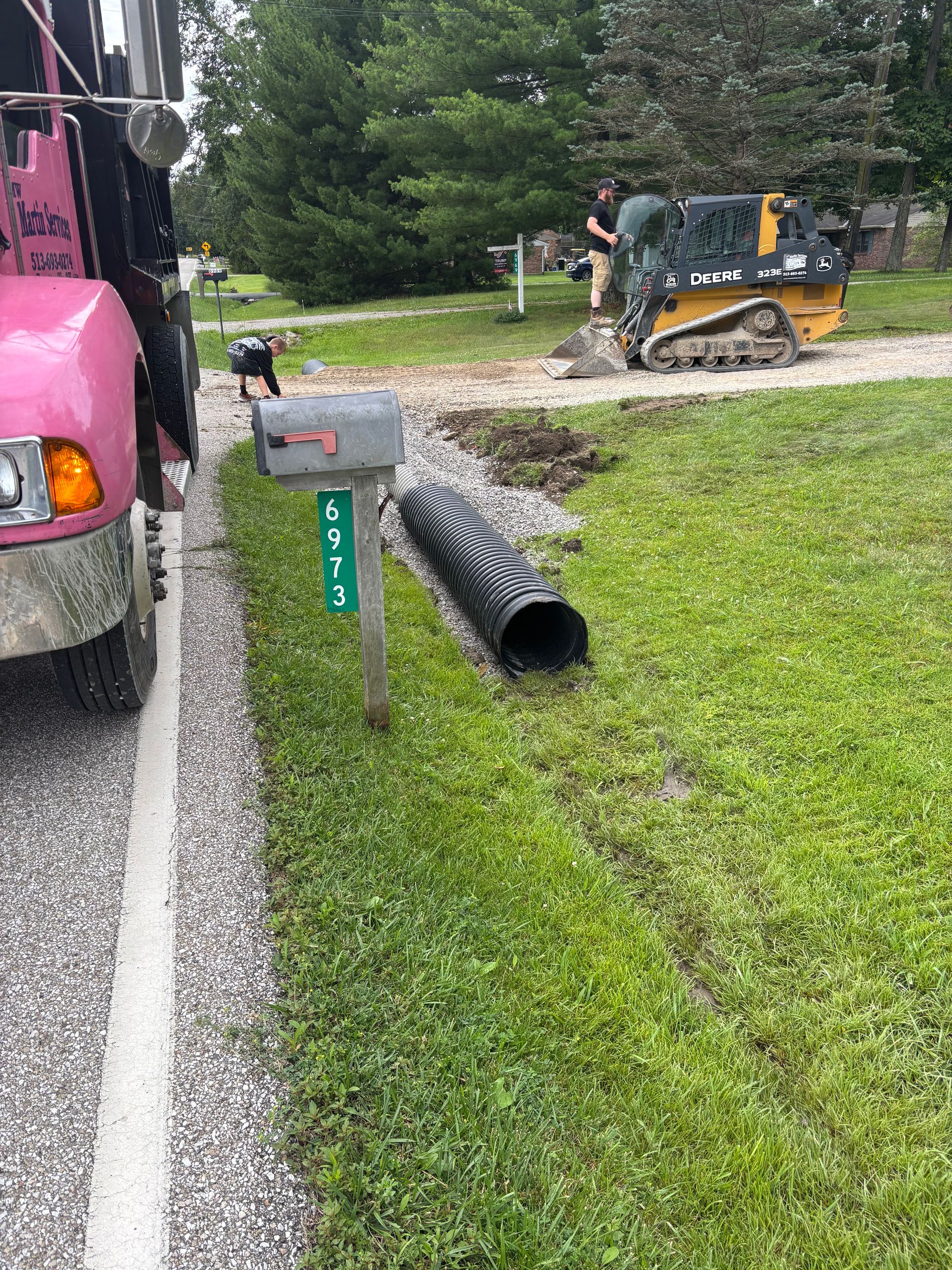
Using your John Deere 323E track loader and Bobcat 331 excavator, we:
- dig out the old culvert
- remove collapsed concrete or rusted steel
- clean out the drainage channel
- prepare the trench for the new pipe
3. Installing the New Dual‑Wall HDPE Pipe
We set the new pipe at the correct grade so water flows smoothly. Proper slope is critical — too flat and it clogs, too steep and it erodes.
4. Backfilling With the Right Materials
We use:
- #57 limestone for bedding
- compacted gravel around the pipe
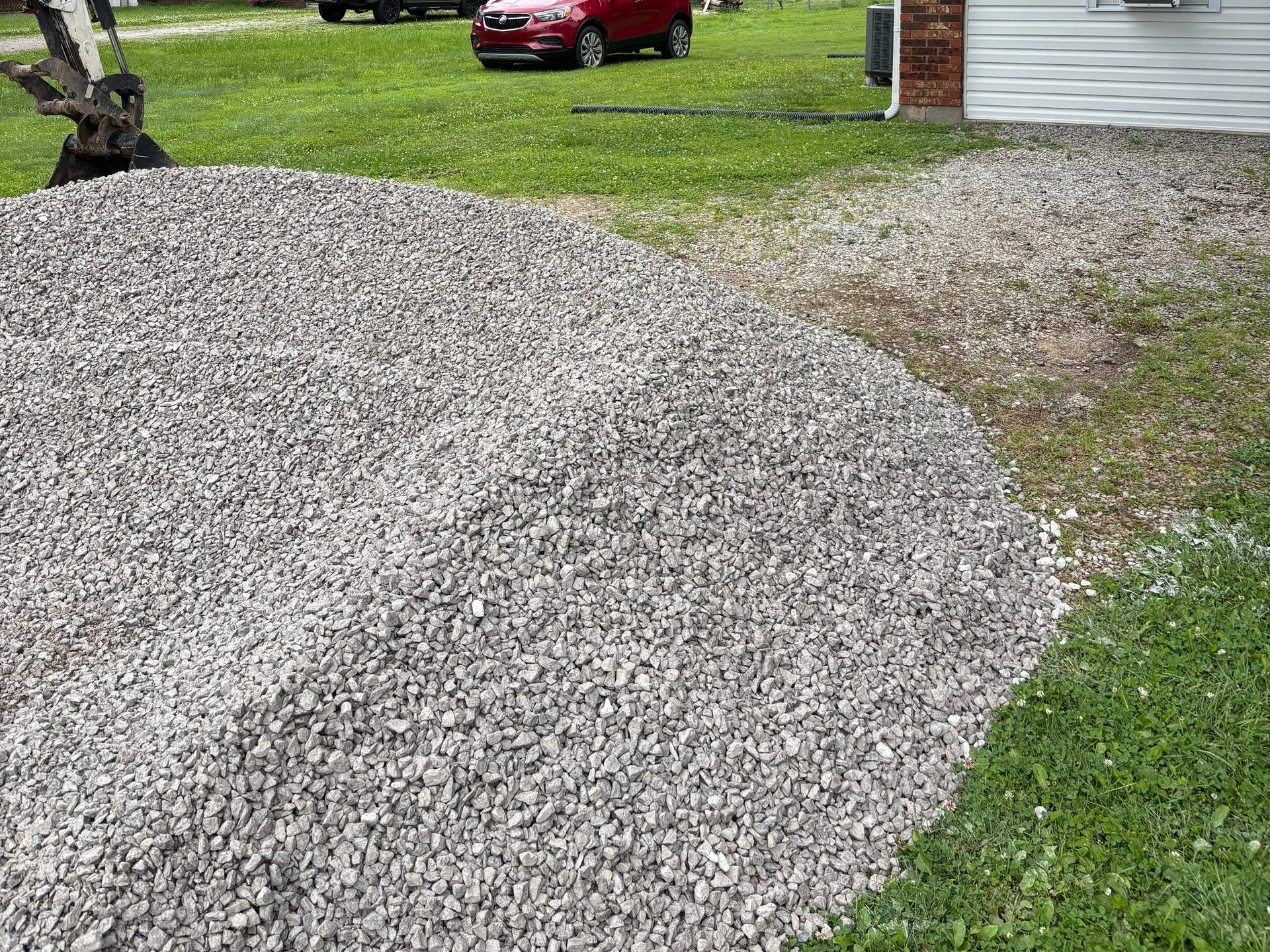
- top layer of driveway stone to finish
This prevents settling and ensures the pipe stays locked in place.
5. Final Grading & Driveway Repair
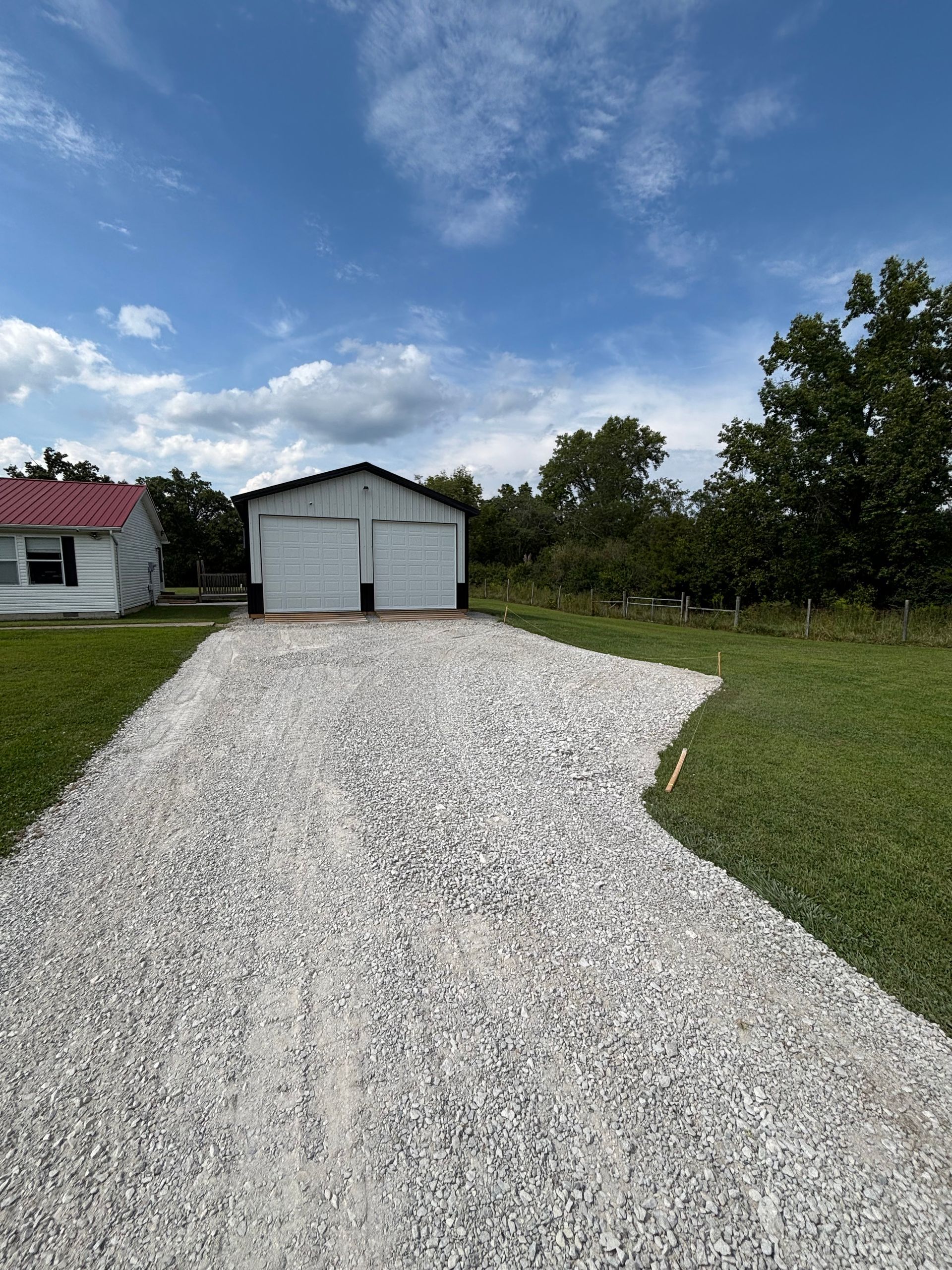
We rebuild the driveway surface, compact the stone, and ensure water flows exactly where it should.
Why Proper Culvert Replacement Matters
A failing culvert doesn’t just cause water problems — it destroys driveways.
Replacing a culvert with modern HDPE pipe:
- prevents washouts
- protects your driveway investment
- improves drainage
- increases driveway lifespan
- stops erosion
- eliminates future rust or collapse
A good culvert is the foundation of a good driveway.
Serving Southwest Ohio
MW Martin Services replaces culverts throughout:
- Clermont County
- Brown County
- Highland County
- Adams County
- Clinton County
- Fayette County
- Warren County
If your driveway is washing out, flooding, or sinking, your culvert may be failing — and replacing it now prevents much bigger problems later.
See if we service your area, Check our Service Areas Overview
Request a Fast Online Estimate — No Phone Call Needed