
How We Rebuilt a Morrow, Ohio Driveway From the Edges In
A ground-up regrade on Morgans Run Drive — 28 tons of Type-C base, 27 tons of #411 finish coat, and a parking area added from scratch.

Nature's Symphony

Faces of Humanity

Sands of Time

Beyond Boundaries
The Call
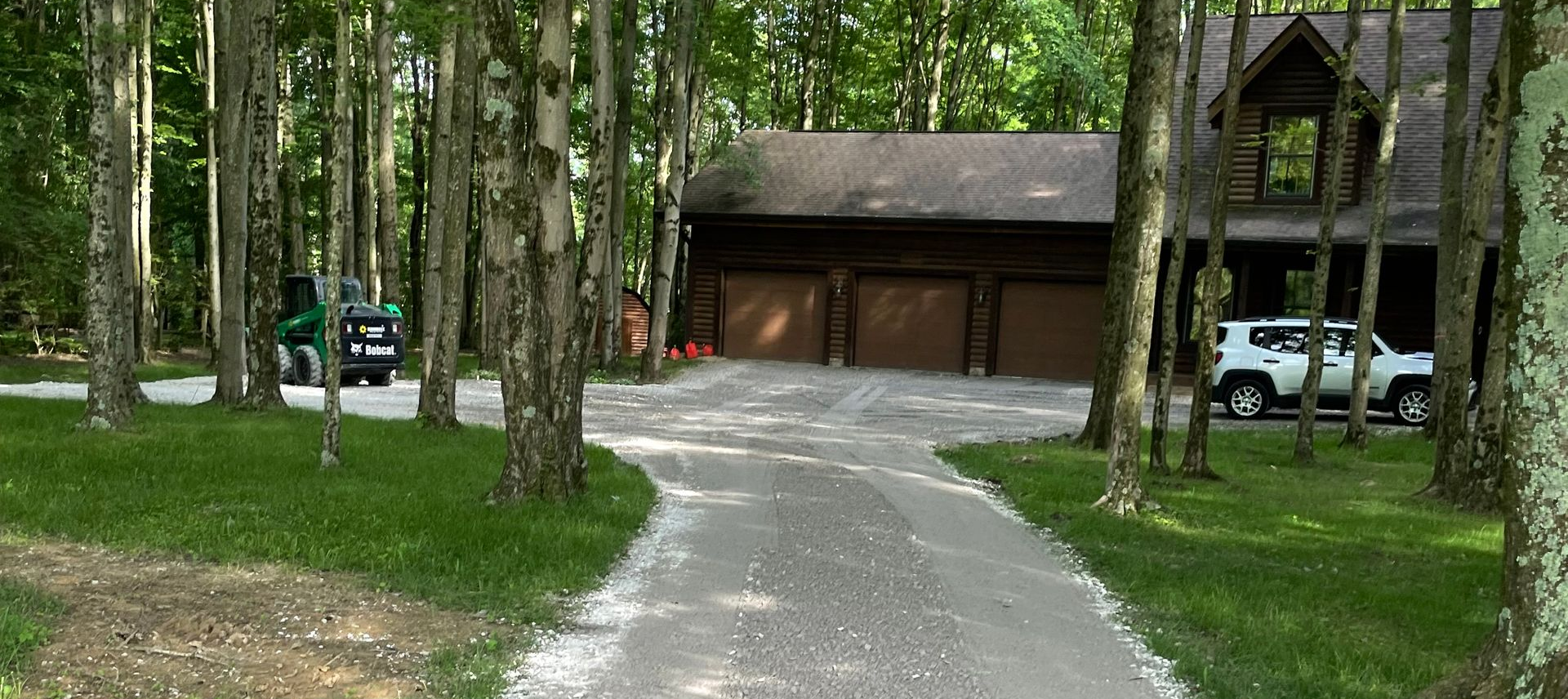
The homeowner on Morgans Run Drive in Morrow reached out needing more than a simple top coat. The driveway had been neglected for years — not unusable, but heading that direction. Edges were gone. Grass had taken over the center strip. The grade had gone flat in places. There was no real place to park off the main drive. It was the kind of job where throwing a load of #411 on top would have been the wrong move — the surface problems were symptoms of base and grade problems, and band-aiding the surface wouldn't fix those.
We scheduled a walk, confirmed the full scope on-site, and put together a plan that addressed everything at once: edge reclamation, center berm removal, full regrade, parking area construction, and a complete base-and-surface material install. One visit, one crew, done right.
What Happens When You Skip Maintenance for Years
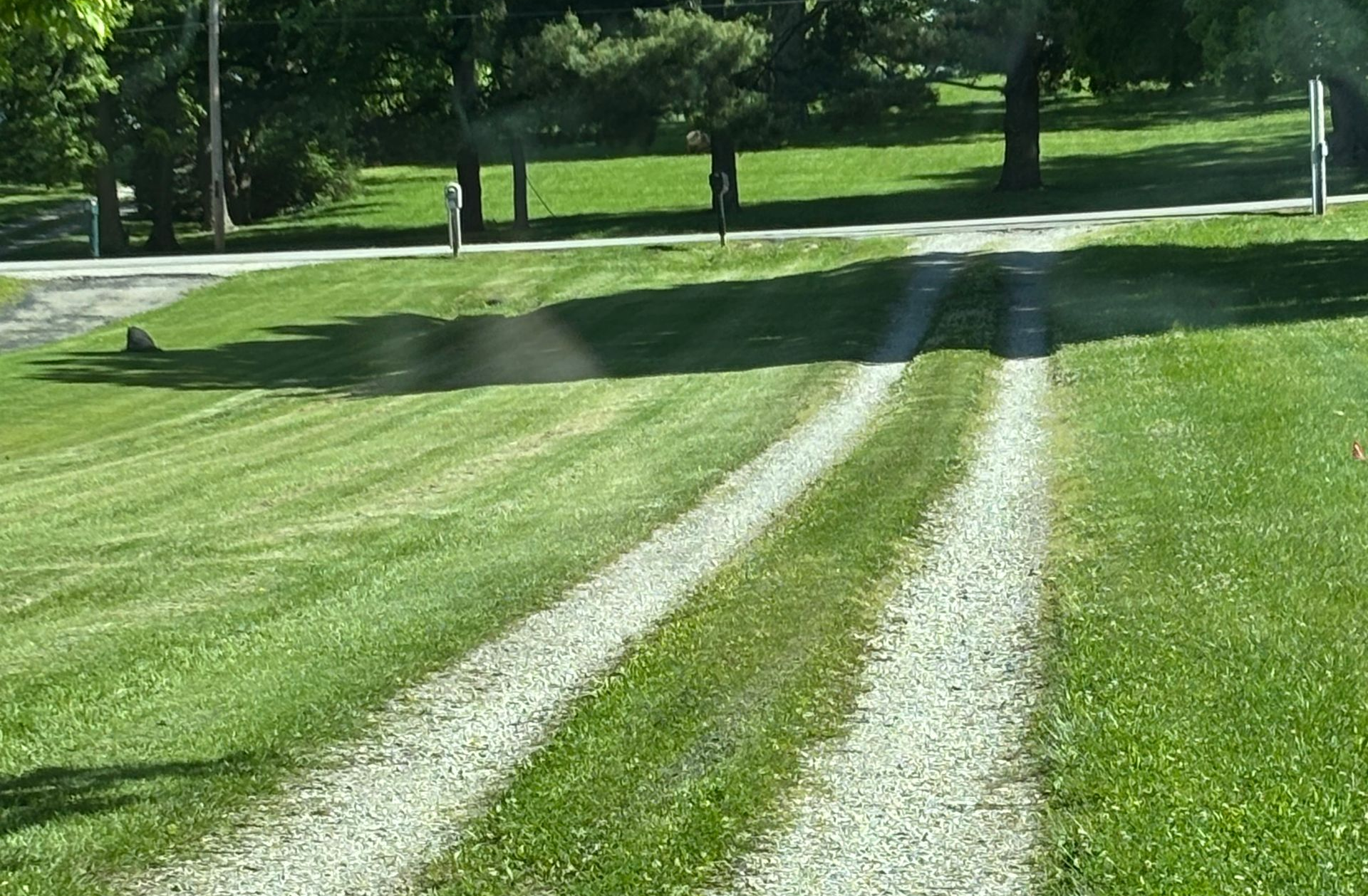
Driveway deterioration follows a predictable sequence, and once you've seen it enough times, you can read exactly how long a driveway has been neglected just by looking at it. It starts at the edges. Grass creeps in from the shoulders when there's no physical boundary holding it back — no curbing, no edging, no regular blade work keeping the line defined. The driving surface narrows a few inches each season. Most homeowners don't notice until it's dramatic.
Next, the center berm forms. This one is counterintuitive until you understand the mechanics. A properly built gravel driveway has a slight crown — a peak in the center that sheds water to both sides. When the crown flattens out from repeated traffic, water starts running down the middle of the lane instead of off the edges. The center stays wet longer. Vegetation establishes itself in that wet, compressed strip. A berm grows. That berm then traps even more water, keeping the center of the driveway saturated and accelerating the weakening of the base beneath it.
By the time a homeowner calls, the problem usually isn't just cosmetic. The base under a neglected driveway has often been compromised — weakened by standing water, shifted by freeze-thaw cycles, compacted unevenly by traffic that's been funneled into an increasingly narrow lane. A top coat won't fix that. It'll look fine for a few months, then the soft spots will telegraph back through the surface, and you'll be back where you started. We see it constantly. That's why we always assess the full picture before recommending a fix.
Our Approach — Start at the Edges
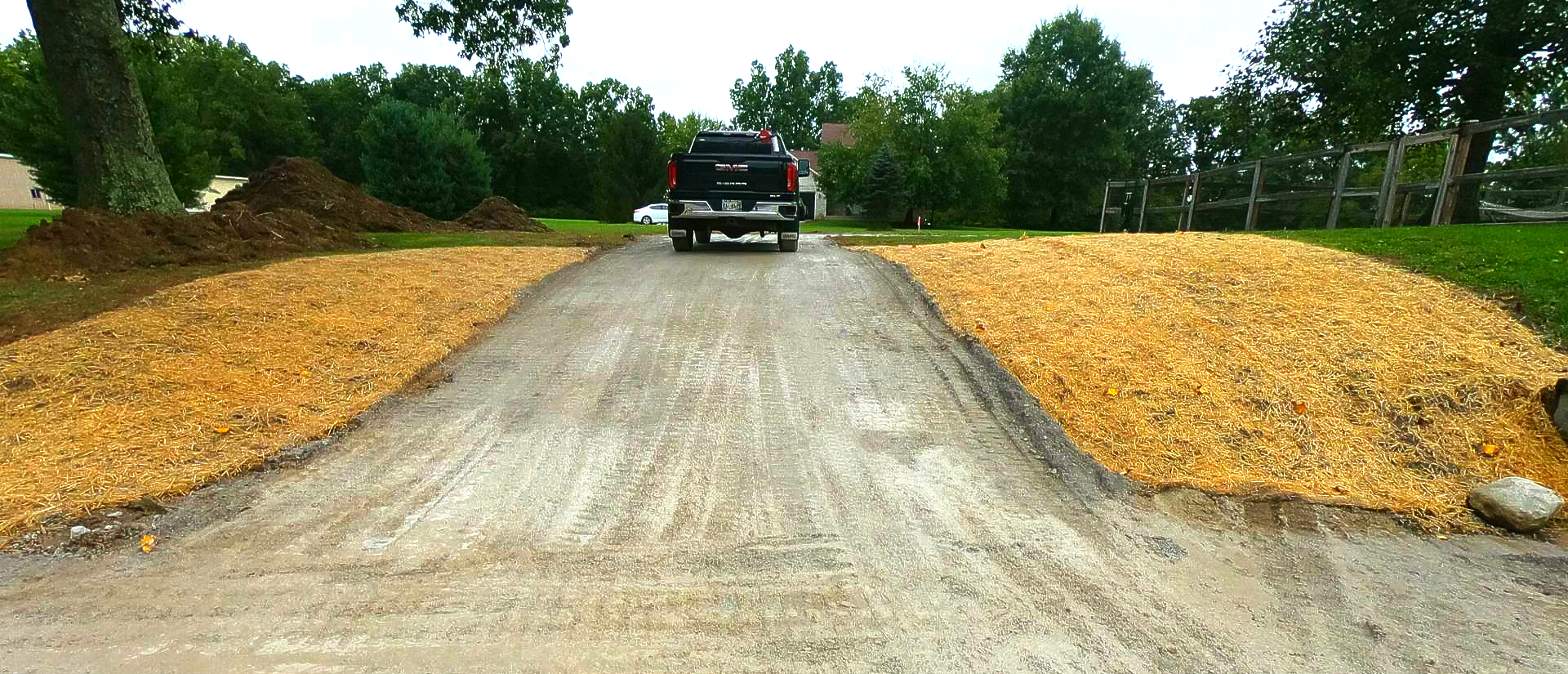
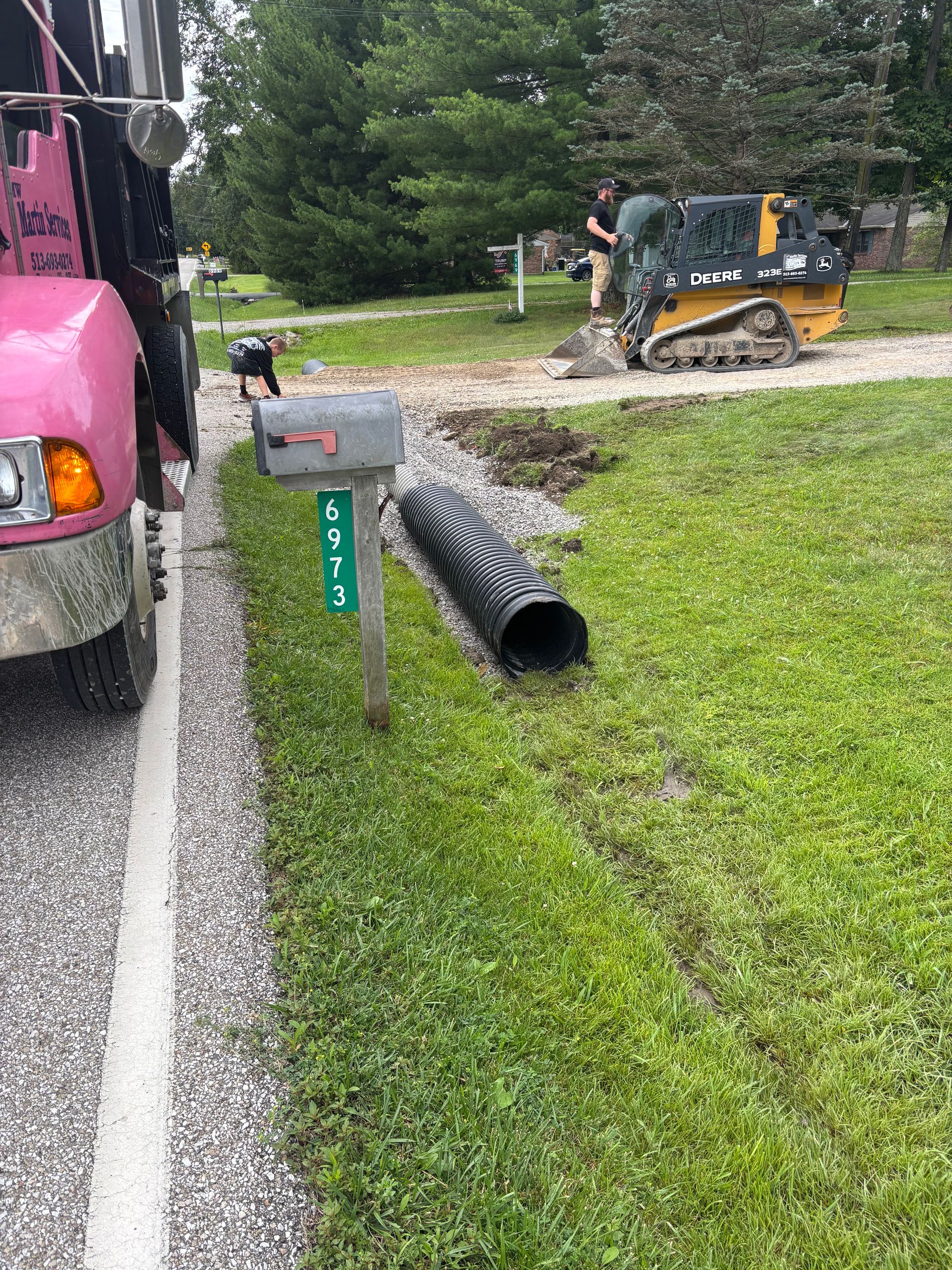
We started with the skid steer along both edges of the driveway. Edge reclamation isn't glamorous work — it's slow, precise passes along the full length of the drive, cutting grass and roots and establishing a clean boundary. But it's where the job sets up correctly. You have to know where the actual driveway ends and the shoulder begins before you can grade anything accurately. On Morgans Run, the grass had come in far enough on both sides that the effective lane width had been reduced significantly from its original footprint. Cutting those edges back and establishing a clean, consistent line gave us the working boundary for everything that followed.
Then we tackled the center berm. That strip of grass down the middle is almost always a sign that a driveway has lost its crown — the slight peak in the center that sheds rainwater to both sides. When the crown flattens, water runs down the middle instead of off the sides, vegetation moves in, and the cycle accelerates. We stripped it out with the skid steer and blended the material back into the grade on both sides. With the edges reclaimed and the center cleared, we had the full driveway width back in play and a clean profile to work with for the regrade.
Regrading the Full Driveway
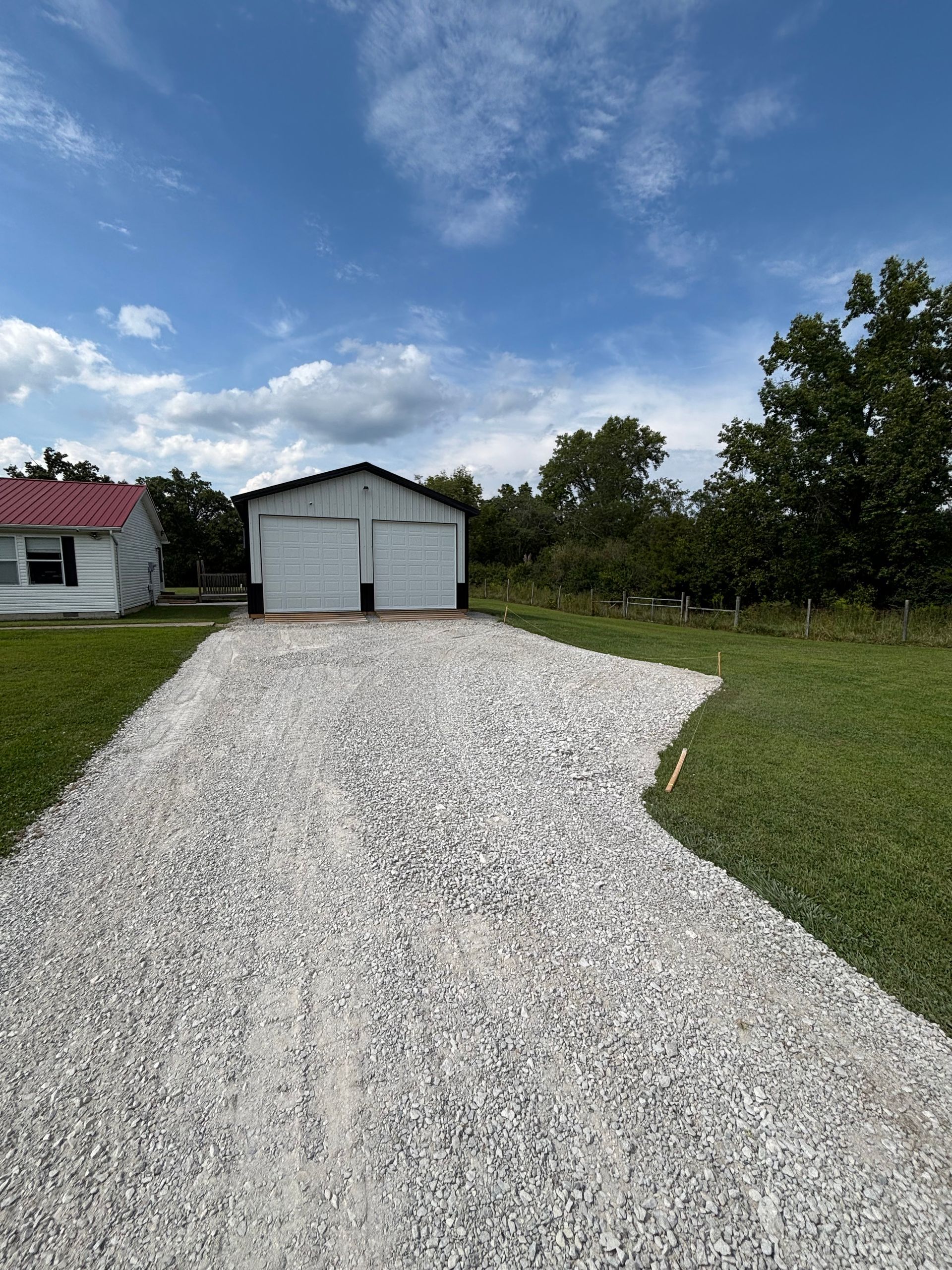
With the edges reclaimed and the center cleared, we ran the full regrade — shaping the profile from one end of the drive to the other using the skid steer. The goal is always the same: water needs a clear path off the surface and away from the foundation. We work to restore the crown, eliminate any low spots, and establish consistent pitch toward the shoulders so runoff moves the way it's supposed to. On this job, the parking area was incorporated into the same grade work — shaped level enough for vehicles to sit stably, while still allowing water to run off the perimeter rather than pool in the center.
Regrading before laying base material matters more than most homeowners realize. If you put stone down on an uneven subgrade and then compact it, you're locking in those irregularities. You'll have high spots that wear thin and low spots that hold water — the same problems you started with, just under a layer of new stone. Doing the grade work first, before any material goes down, gives you a controlled foundation that the base layer can perform correctly on top of.
The Material — Why We Used What We Used
Type-C Limestone — The Base (28 Tons)
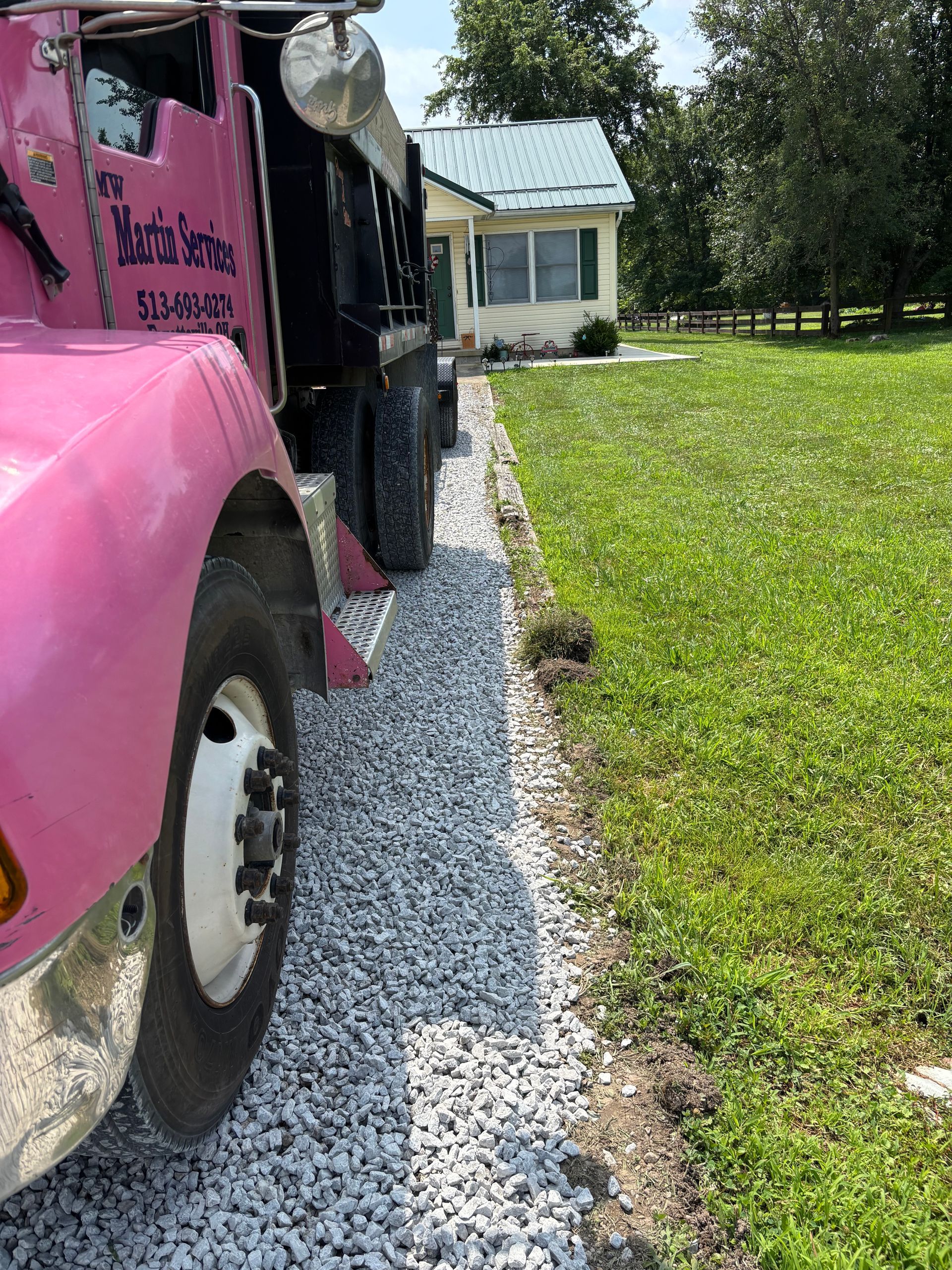
Type-C is our go-to base material for jobs like this. It's angular crushed limestone — the edges interlock when compacted, which means it doesn't shift or wash out the way rounded stone does. On a clay subsoil like you find throughout Warren County, that interlocking structure is critical. Rounded aggregate will move laterally under load. Angular aggregate locks in place and transfers load down into the subgrade instead of sideways into soft spots. On Morgans Run, we brought in 28 tons tailgated across the full length of the driveway and parking area. Spread it, graded it to the correct profile, and compacted it into a solid foundation before we ever touched the finish material. No exceptions to that sequence.
#411 Limestone — The Surface (27 Tons)
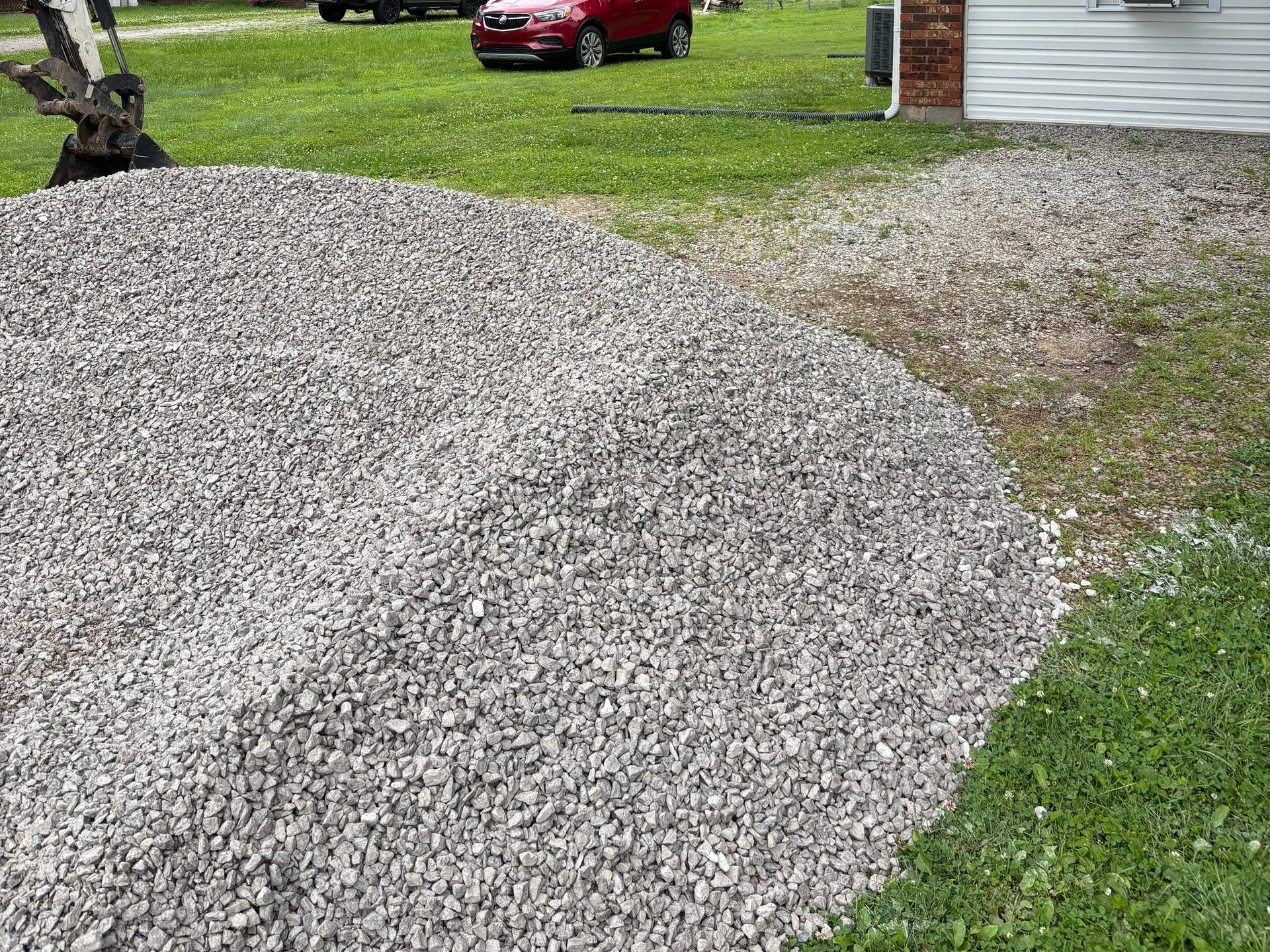
#411 is a blend of #57 stone and limestone fines. When it compacts, the fines fill the voids between the larger stone and produce a firm, dense surface that's comfortable to drive on and doesn't behave like loose gravel. It's the standard finish coat for residential driveways in Ohio because it handles daily traffic well, resists erosion, and presents a clean appearance that holds up over multiple seasons. We tailgated 27 tons over the compacted Type-C base on Morgans Run, graded it to match the established profile, and ran compaction on the finish coat to lock everything in. The result is a surface that's functional the day it's laid and gets progressively more stable as traffic continues to compact it over time.
Tailgating vs. Dumping
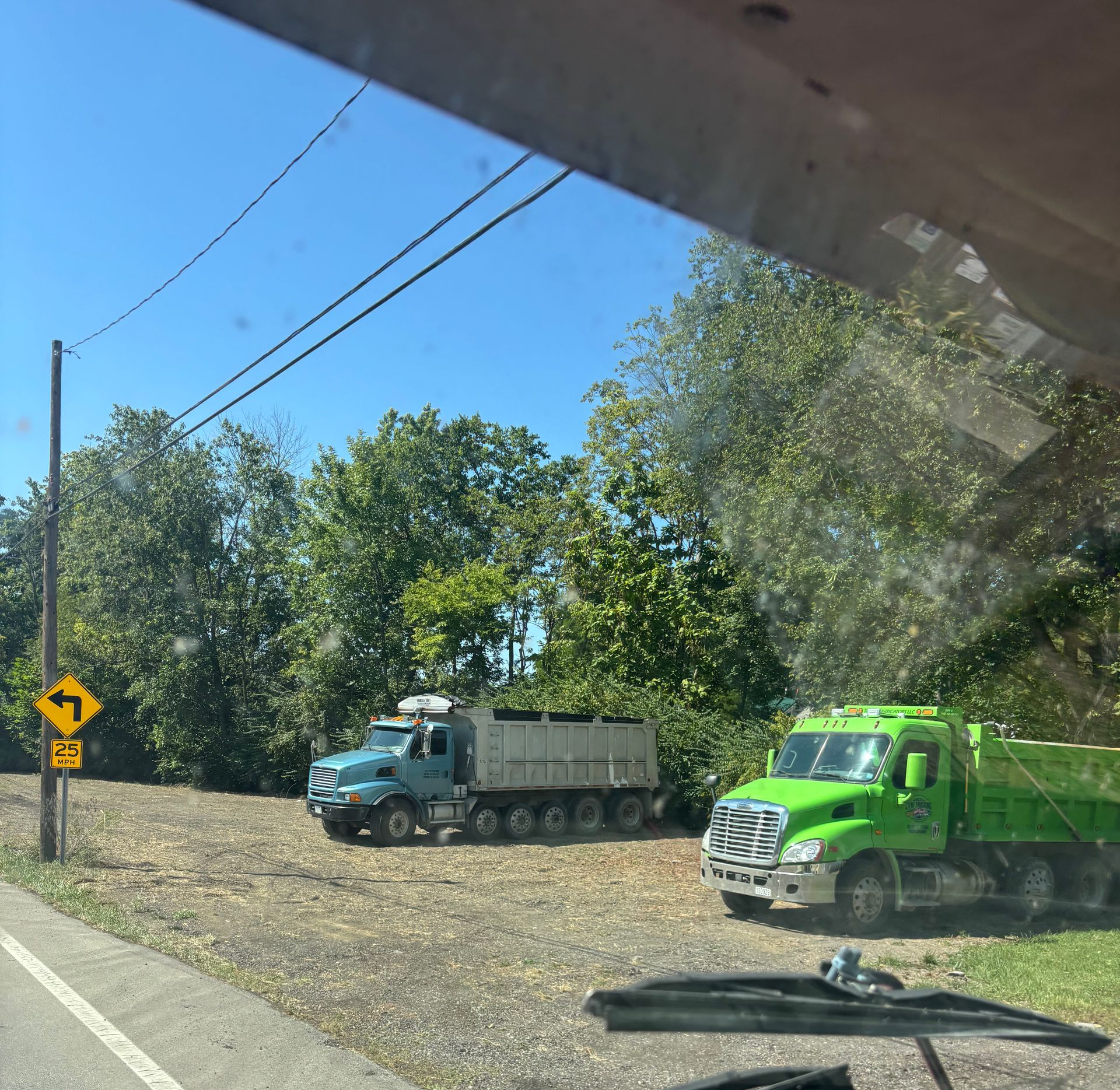
On this job, we tailgated all the material — meaning the delivery truck moves slowly down the driveway as it unloads, spreading the stone in a controlled, even layer rather than dumping it all in one pile at the end or beginning of the drive. Tailgating gives you better coverage from the start, a more consistent layer thickness, and a much more even starting point for grading — especially on longer driveways where getting even distribution from a single dump pile requires significantly more equipment time. When you're putting down 55 tons across a full driveway and parking area, tailgating is the right method.
Total: 55 Tons
28 tons Type-C base. 27 tons #411 surface. 55 tons total across the driveway and parking area — tailgated in, graded twice, compacted on both passes. One skid steer, one crew, one day to do it correctly. That's the job.
The Finished Product
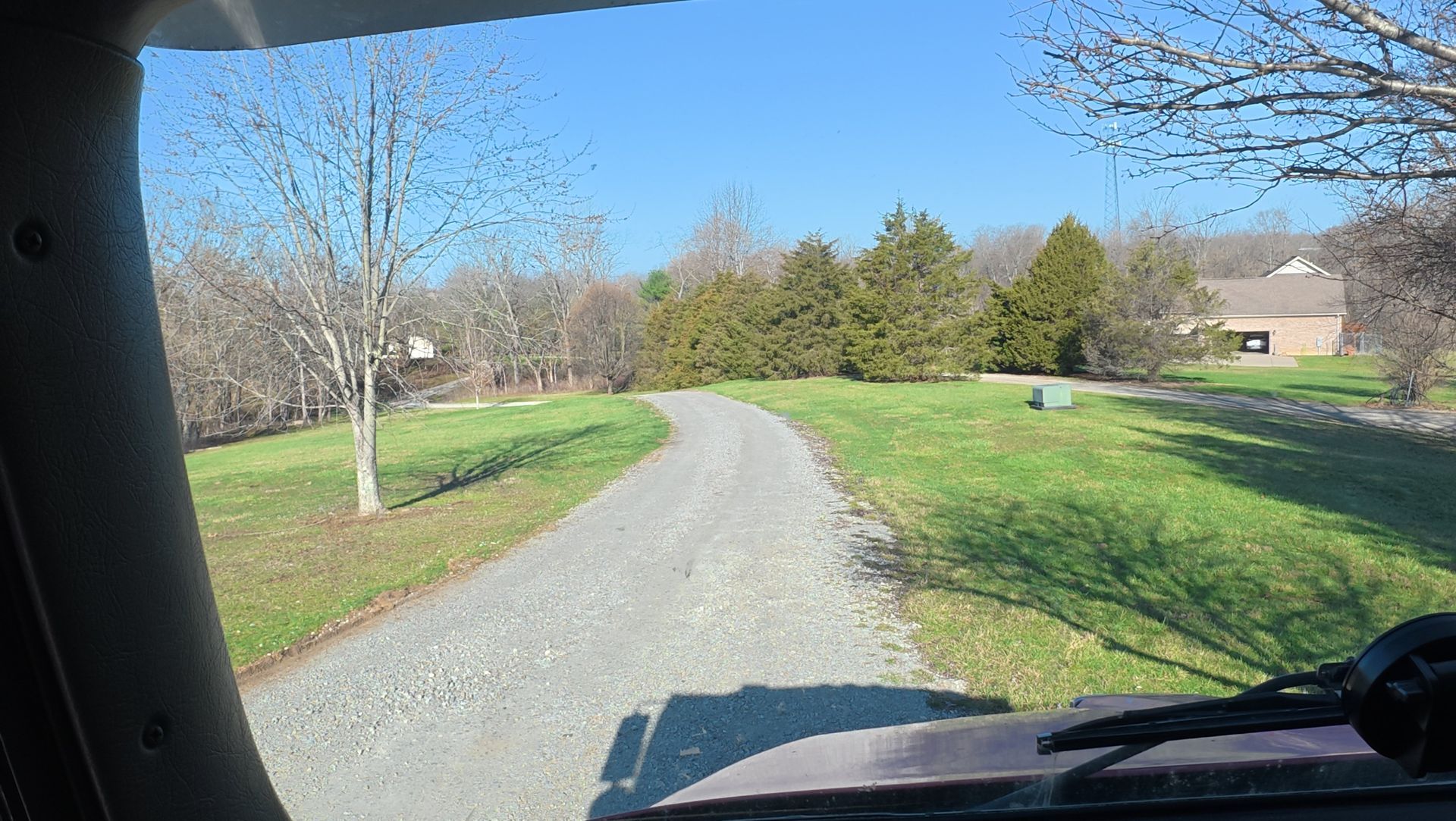
When we pulled off Morgans Run Drive, the homeowner had a driveway that looked and functioned like it was built yesterday. Full-width lane from one end to the other. Clean edges. No center berm. Proper crown and drainage. Fresh limestone surface on a solid, compacted Type-C base. A real parking area off to the side — stable, level, and ready for daily use without sinking or rutting.
The job cost more than a simple top coat would have. But a top coat would have failed within a season — maybe two — because the underlying problems weren't going to fix themselves. Doing it right means reclaiming the edges, correcting the grade, removing what shouldn't be there, and putting the right base down in the right amount before the surface material ever gets touched. That approach costs more upfront and lasts significantly longer. It's the only way MW Martin Services works, and it's why our driveways hold up when cheaper approaches don't.
Is Your Driveway Showing the Same Signs?
If your driveway in Morrow, Warren County, or anywhere in Southwest Ohio is showing the same signs this one was — edges growing in, a center berm forming, grade going flat, soft spots appearing after rain — don't wait until it becomes an emergency repair. We can assess your project and get you a quote fast, without requiring a phone call. Use the estimate form, describe what you're dealing with, and we'll come back to you with a straightforward number and a clear plan.
→ Request a Fast Online Estimate
→ View Morrow, Ohio Driveway Services Page
→ View Morgans Run Drive Project Page
MW Martin Services serves Morrow, Ohio and all of Warren County with gravel driveway installation, driveway regrading, limestone delivery, and skid steer services. We also serve Maineville, Oregonia, Lebanon, Pleasant Plain, and surrounding communities in Southwest Ohio.