1,450-Foot Gravel Driveway Repair & Drainage Correction in Peebles, Ohio
A long gravel driveway can develop more than just potholes and ruts. When drainage problems begin keeping water on the driveway, simply adding another layer of gravel may not correct the underlying problem.
That's what we were dealing with on this 1,450-foot gravel driveway project in Peebles, Ohio. The driveway included multiple uphill sections, worn and rutted areas, and several locations where the surrounding grade was preventing water from properly leaving the driveway.
Before the new stone went down, the existing driveway needed to be graded and reshaped, drainage needed to be corrected, and several problem areas needed to be opened up so water had a better path away from the driving surface.
Then came the transformation.
1,450-Foot Gravel Driveway Repair & Drainage Correction in Peebles, Ohio
A long gravel driveway can develop more than just potholes and ruts. When drainage problems begin keeping water on the driveway, simply adding another layer of gravel may not correct the underlying problem.
That was the situation with this 1,450-foot gravel driveway project in Peebles, Ohio. The driveway included multiple uphill sections, low and rutted areas, and several locations where high banks along the driveway were preventing surface water from properly leaving the driving surface.
The goal wasn't simply to make the driveway look better. Before the new stone went down, the existing driveway needed to be graded and reshaped, problem drainage areas needed to be corrected, and the surface needed to be prepared for the new stone.
And on a driveway nearly a quarter-mile long, there was plenty of work to do.
More Than Just a Gravel Problem
One of the first things we look at when working on an existing gravel driveway is why the driveway is deteriorating.
Adding stone can replace material that has been lost over time, but if water doesn't have a good way to leave the driveway, fresh gravel alone may not address the underlying issue.
This Peebles driveway had several areas that needed attention. The existing surface had ruts and low areas, portions of the crown needed to be restored, and material along the edges needed to be pulled back into the driveway.
There were also three areas where high banks, approximately 75 feet, 50 feet and 25 feet long, were keeping water trapped along the driveway.
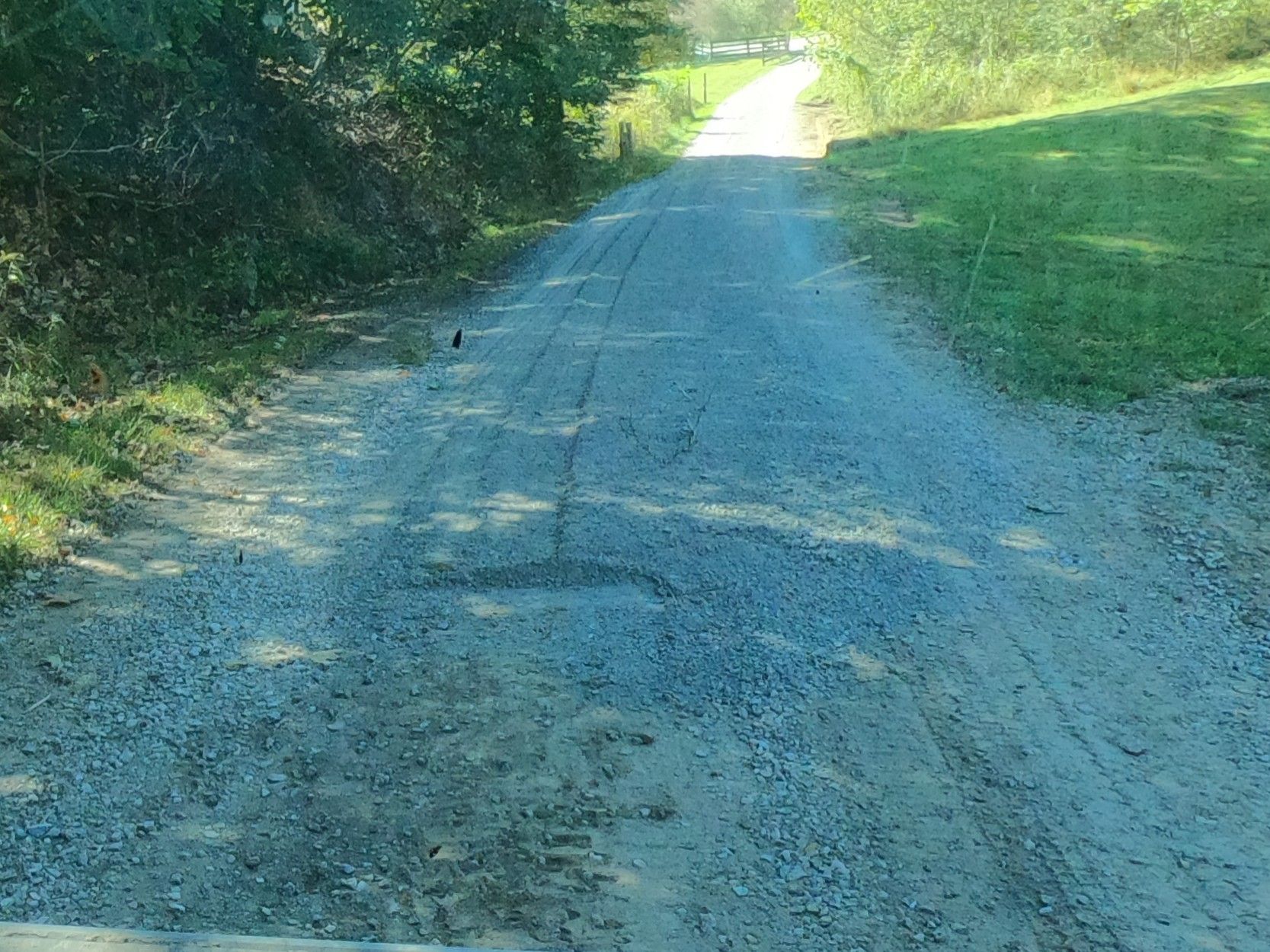
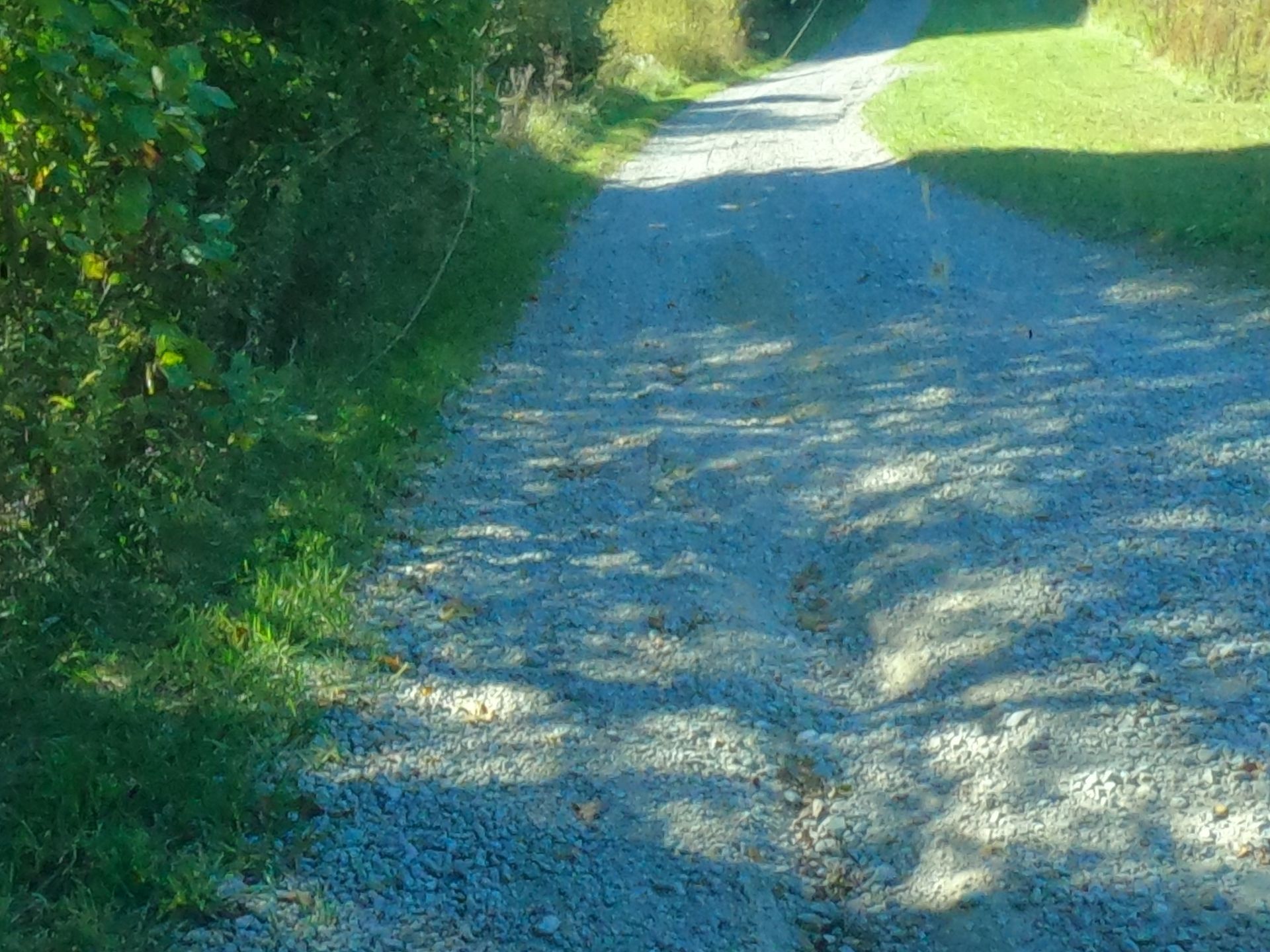
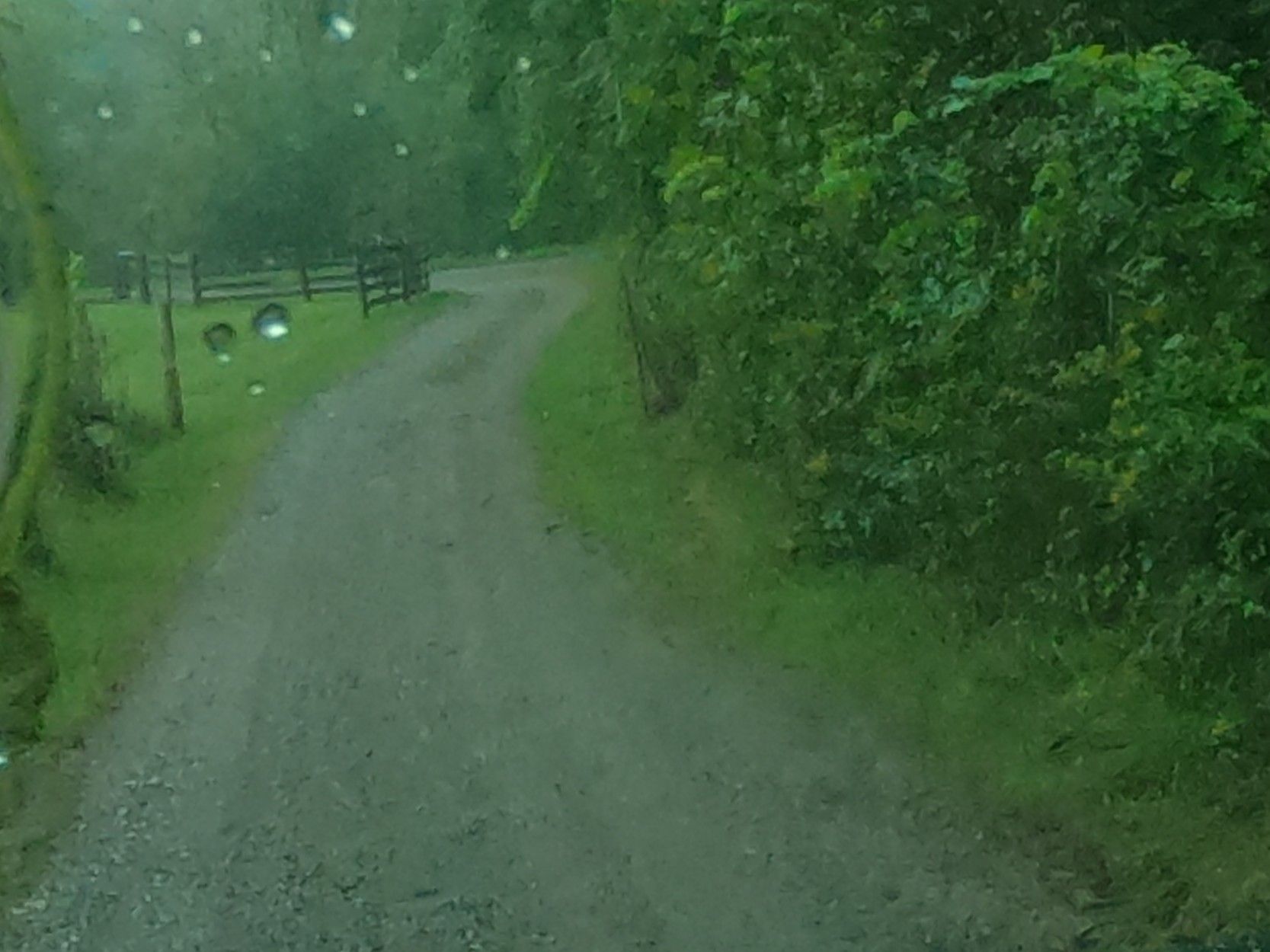
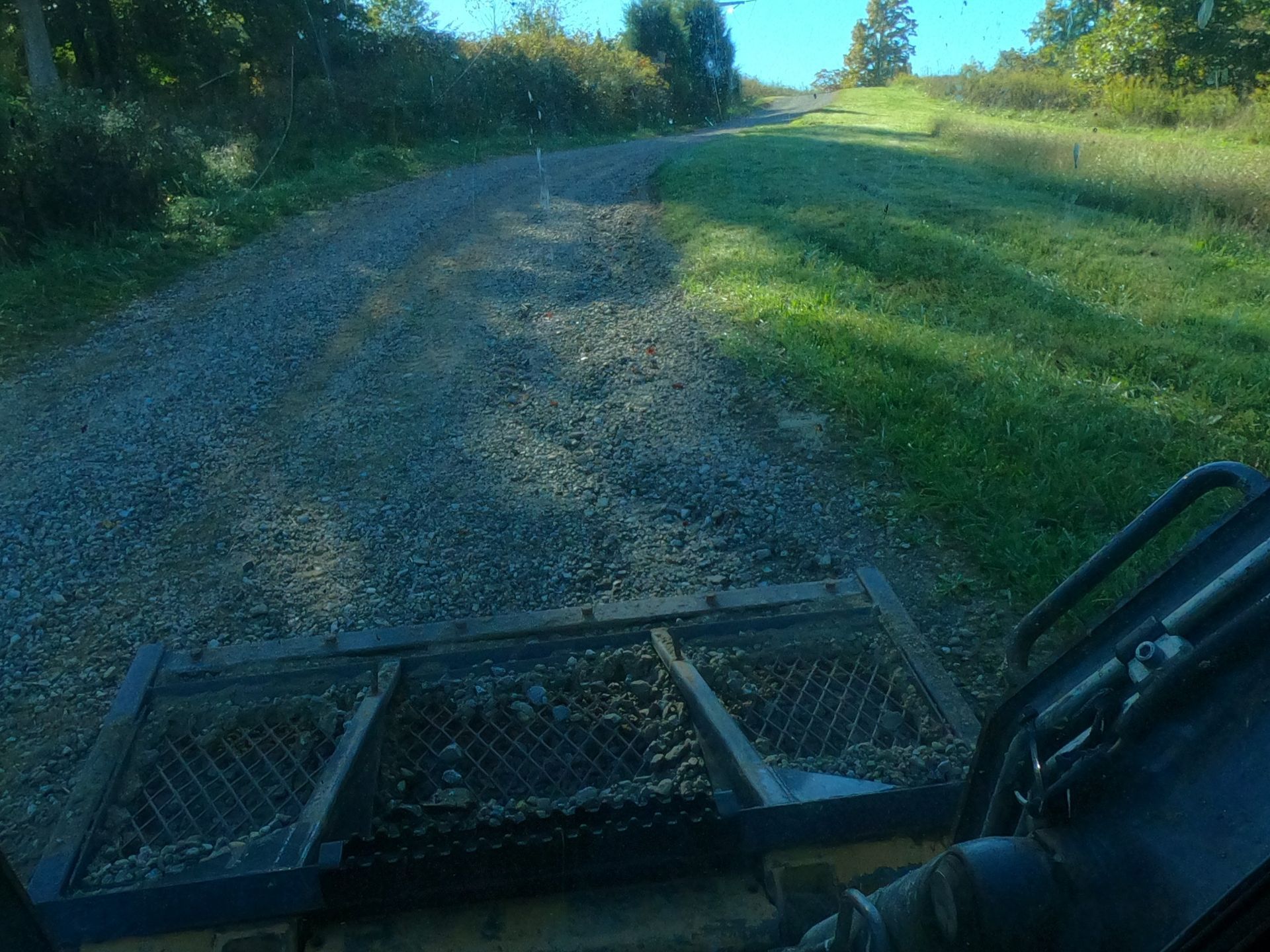
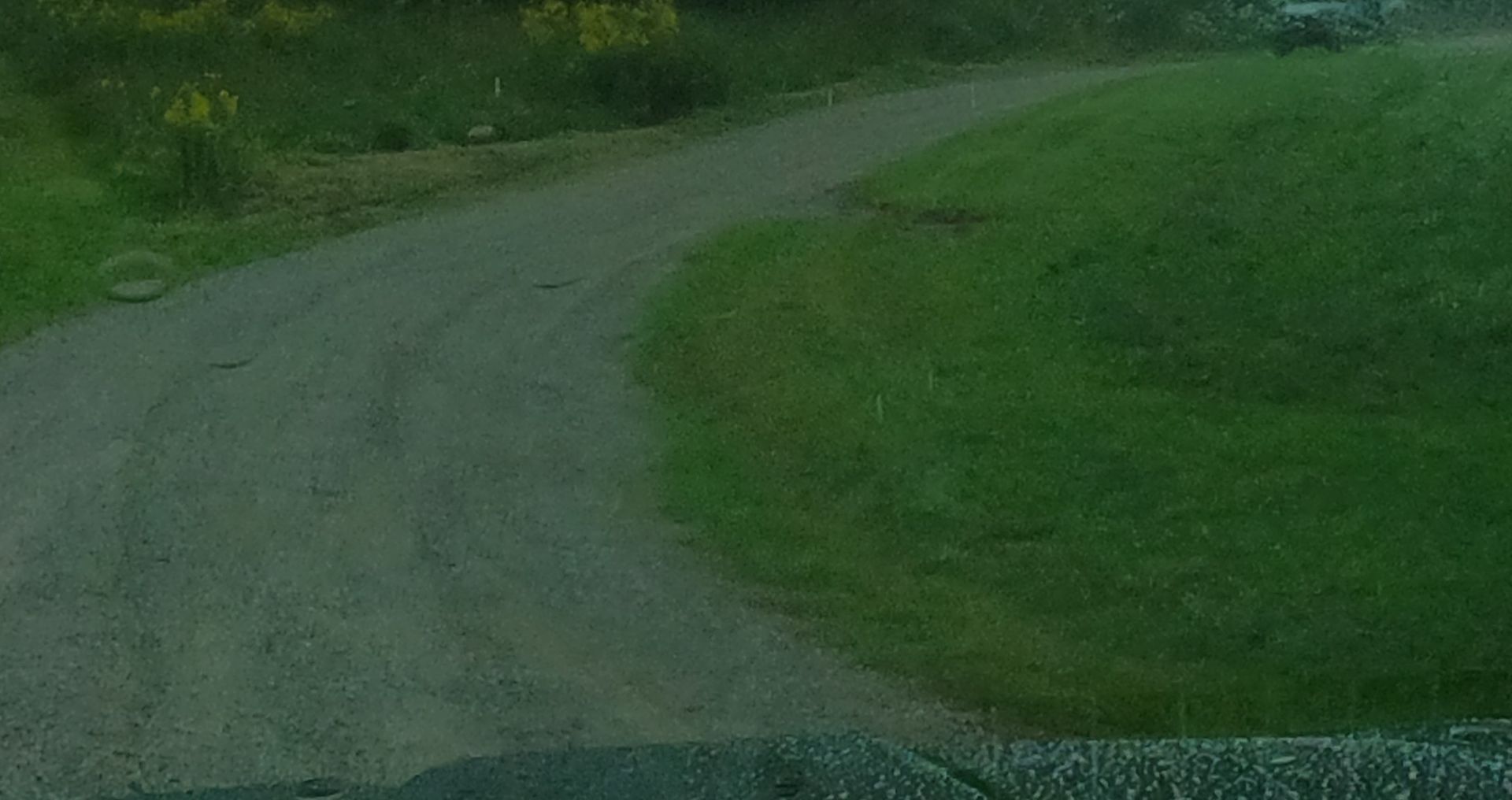


Before repairs began, sections of the 1,450-foot gravel driveway showed rutting, thin areas and drainage-related problems that needed to be corrected before resurfacing.
Correcting the Drainage Before Adding New Stone
Before resurfacing the driveway, we worked on the shape of the existing drive.
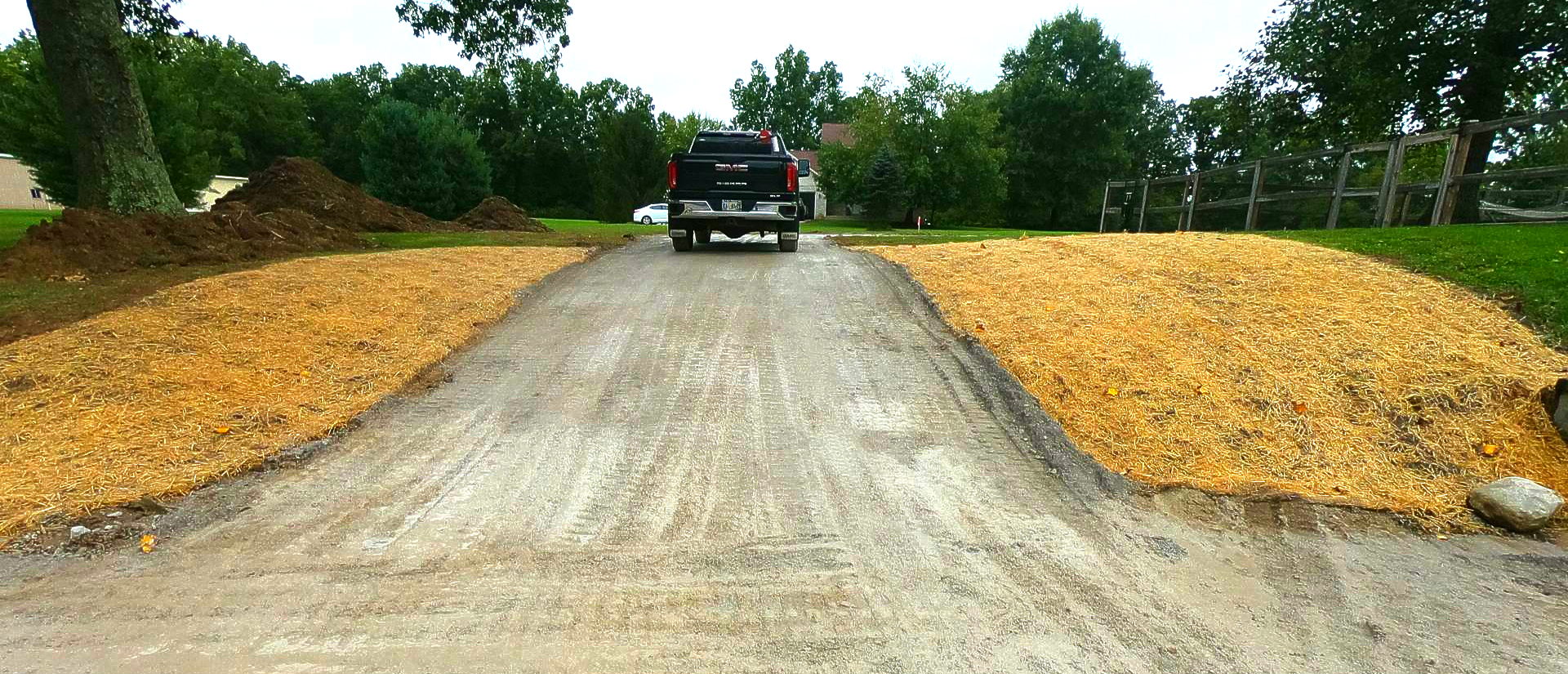
The project included grading and reshaping the driveway, pulling material in from the edges, smoothing rutted areas and reestablishing crown where needed. Several water runoffs were also cut along the driveway to help move surface water away from the travel path.
The three high-bank areas were lowered so water had an exit instead of remaining trapped against the driveway. The disturbed banks were shaped so the customer could seed them afterward.
The project also included extending the pad area in front of the barn.
This part of a gravel driveway repair isn't always as noticeable as fresh stone, but it can be one of the most important parts of the job.
A good finished surface starts with what is underneath it and where the water is going to go.
Resurfacing 1,450 Feet of Driveway With #411 Stone
Once the initial grading and drainage work were addressed, it was time for the new stone.
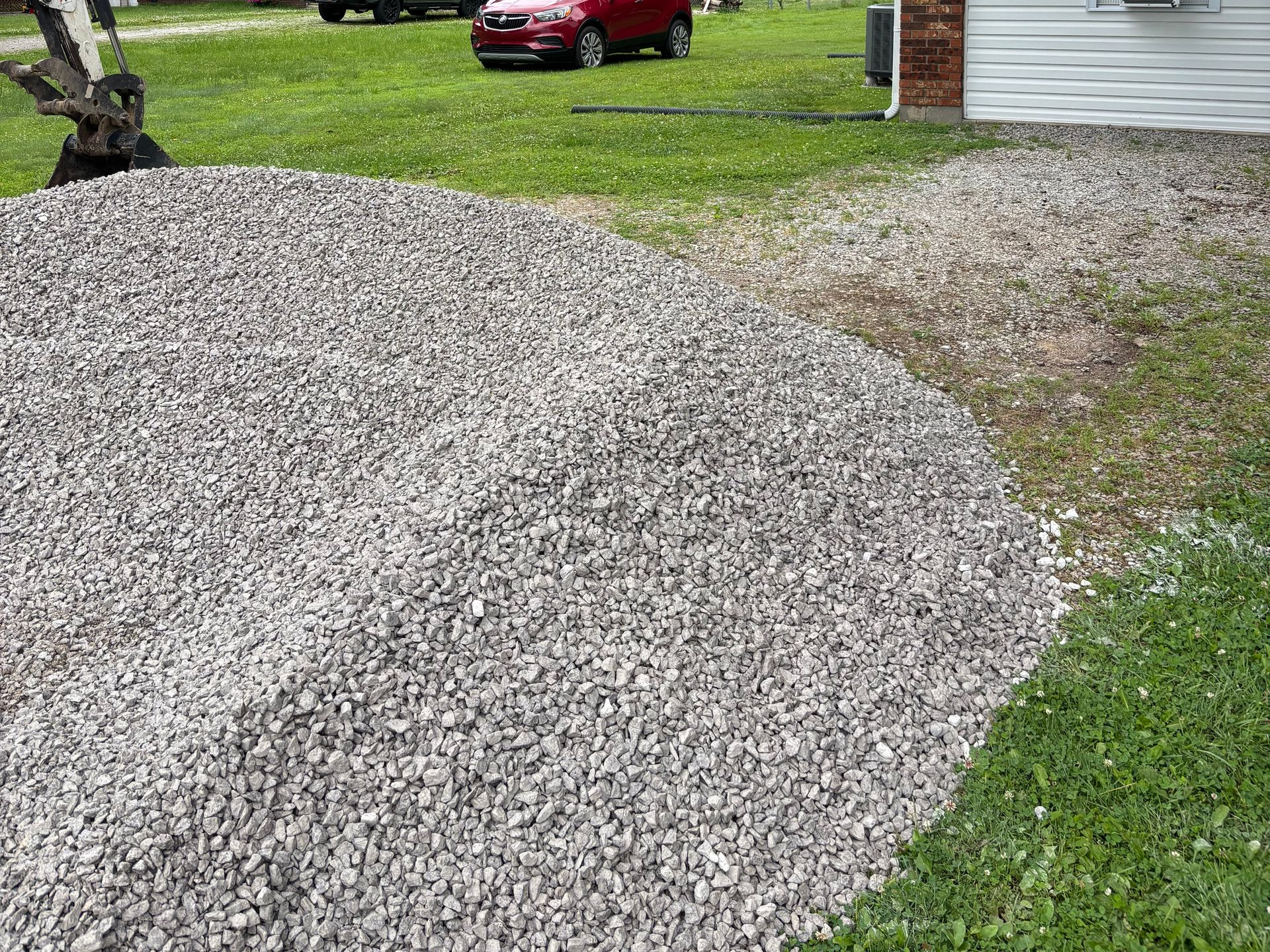
Based on the length, width and taper of the driveway, the project called for approximately 166 tons of #411 stone, with roughly a 2-inch layer planned across the driveway. The amount also accounted for low and rutted areas that needed additional material to bring the driveway back to grade.
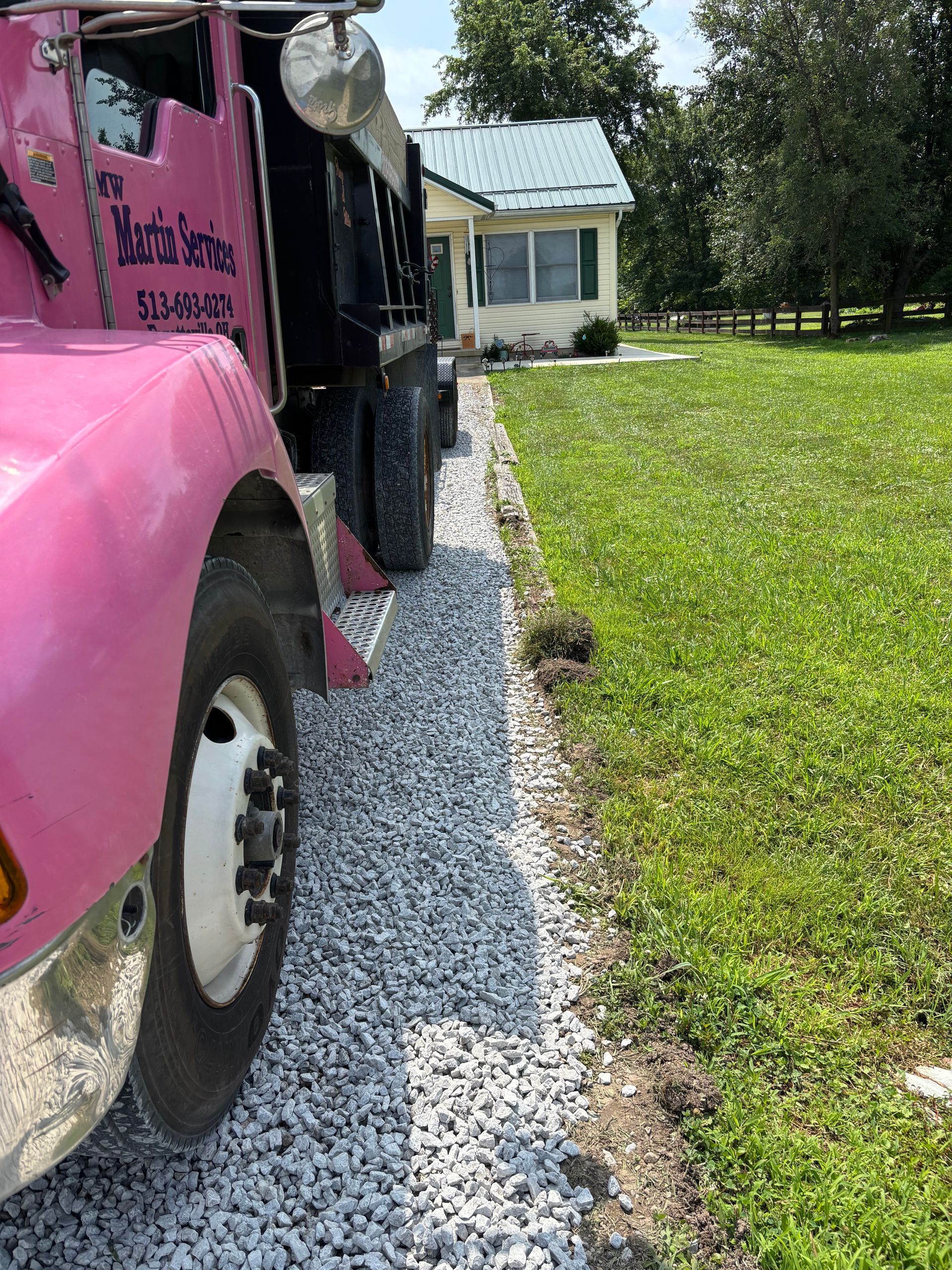
For this project, the stone was supplied and delivered by the customer's chosen material provider and tailgated along the driveway.
After the stone was delivered, the next step was to work the new material into the repaired driveway, smoothing ridges, filling remaining low areas and blending the new stone into the corrected drainage layout.


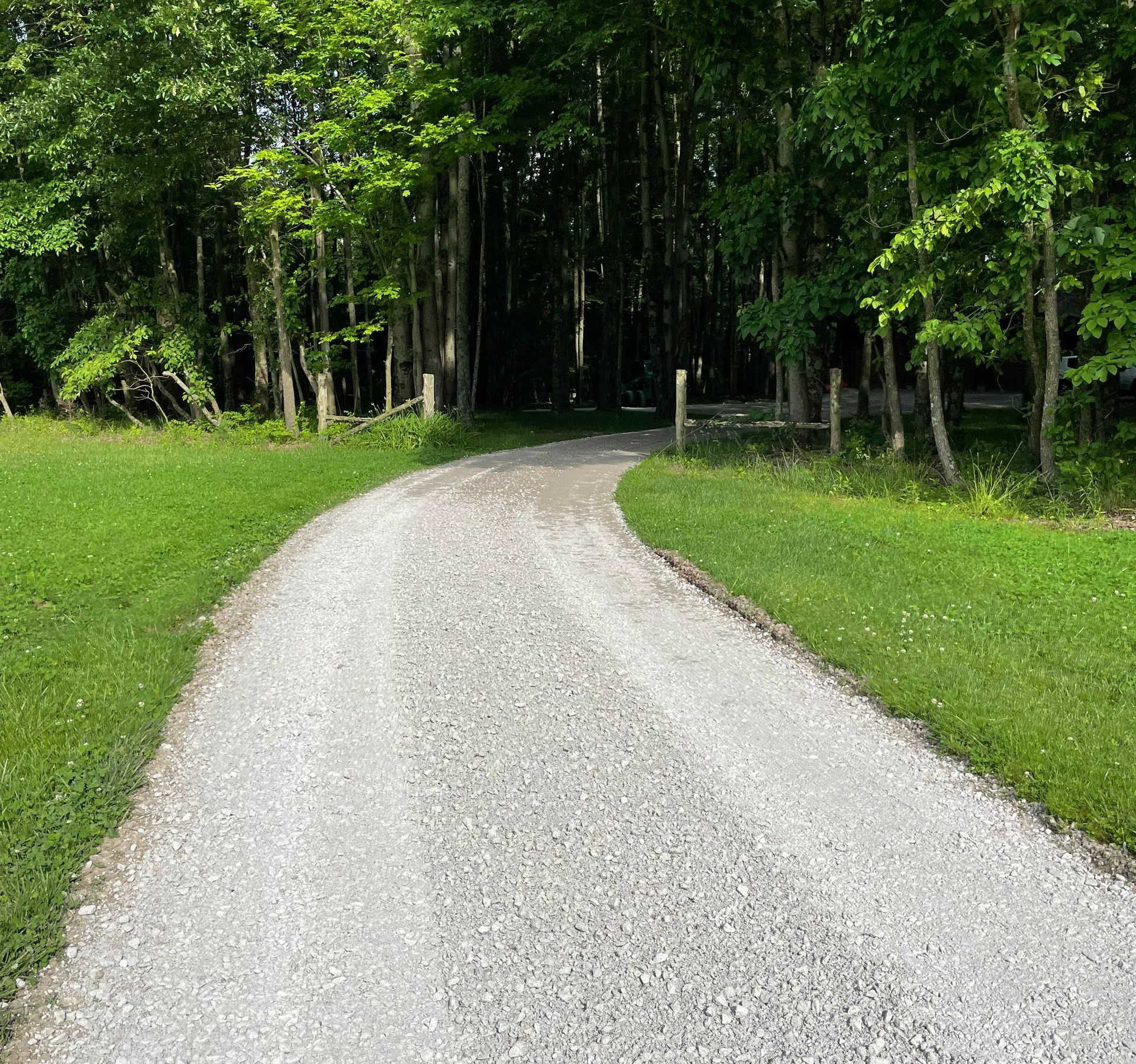
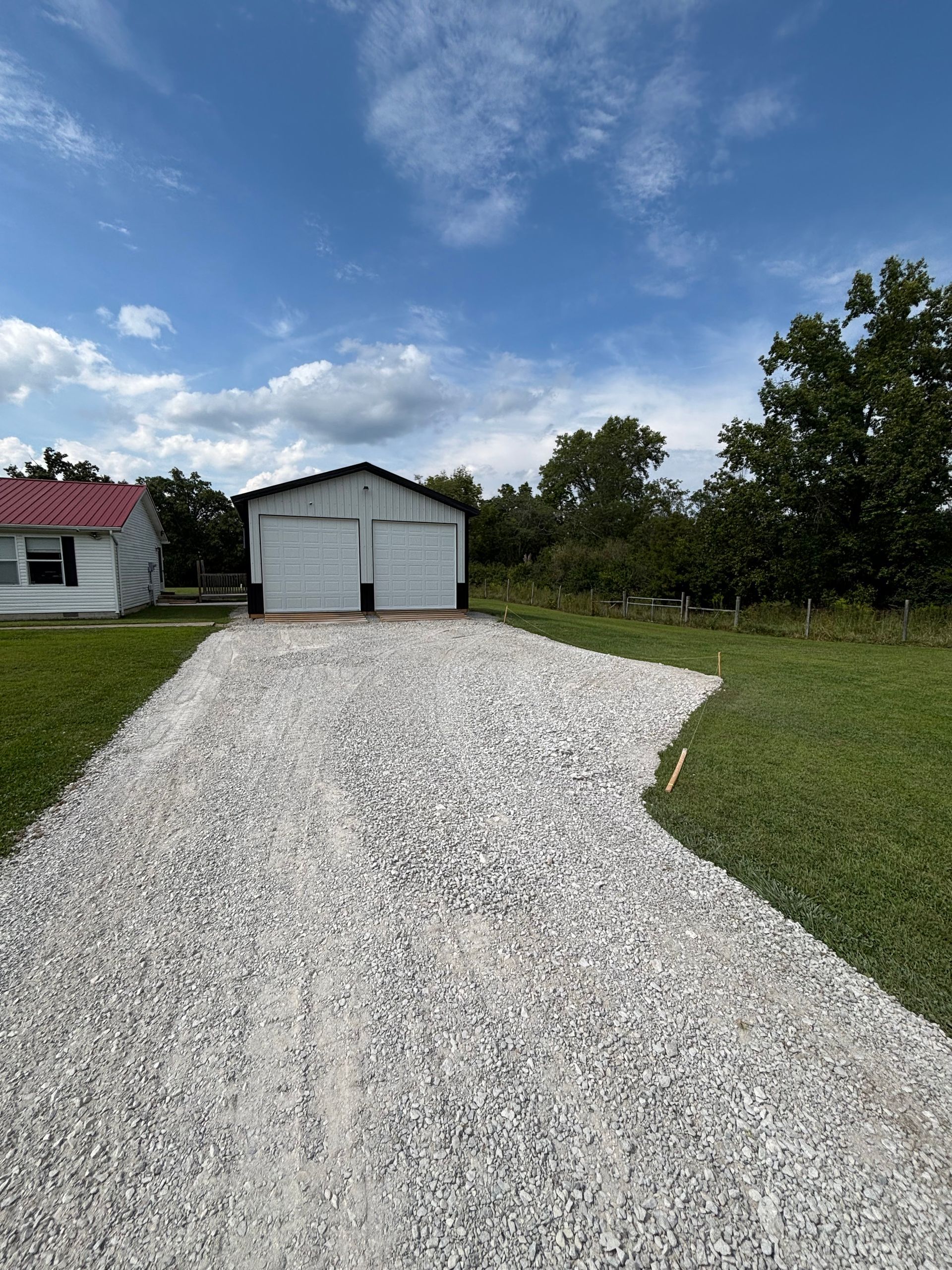
After drainage corrections, grading and new #411 stone, the finished driveway has a consistent gravel surface across the long grades and curves.
Final Grading and Compaction
Getting the stone delivered isn't the end of a gravel driveway project.
The new material still needs to work with the grade and shape established underneath it.
The final phase of this Peebles project included grading the newly delivered stone, filling low areas, smoothing the surface and compacting the full length of the driveway along with the extended barn pad.
The result was a much more uniform gravel surface stretching across the long hills and curves of the property.
Why Drainage Matters on a Gravel Driveway
Gravel driveway problems aren't always caused by a lack of gravel.
When surface water repeatedly travels down the driving surface or becomes trapped in low areas, it can contribute to rutting, material movement and continued maintenance problems.
That's why we look beyond how much gravel a driveway needs.
The shape of the driveway, crown, surrounding grade, existing drainage and low areas all need to be considered when determining what the driveway actually needs.
Every property is different. Some driveways may primarily need grading and fresh stone. Others may have drainage or base issues that need attention as part of the repair.
The goal is to address the driveway that's actually there rather than automatically covering the problem with another layer of gravel.
Long Gravel Driveways Require a Different Approach
A 1,450-foot rural driveway isn't the same project as repairing a short driveway between a house and the road.
Long driveways can include multiple grades, curves and drainage conditions within the same property. A problem near the top of the driveway may be completely different from one hundreds of feet farther down.
This Peebles project is a good example.
What began as a driveway needing new stone also involved reshaping worn areas, restoring crown where needed, creating places for surface water to leave the driveway, lowering banks that were trapping water and finishing everything with new #411 stone and compaction.
That's why we prefer to look at the entire driveway as a system rather than focusing on a single pothole or washed-out section.
Need Gravel Driveway Repair in Peebles, Ohio?
If your gravel driveway has developed ruts, low areas, drainage problems or an uneven surface, adding more stone may be part of the answer, but it may not be the whole answer.
MW Martin Services provides gravel driveway grading, driveway repair, drainage correction and related property improvement services in Peebles, Ohio and surrounding areas.
Whether you're dealing with a short residential gravel driveway or a long rural drive like this 1,450-foot project, we can evaluate the existing conditions and determine what needs to be corrected.
Ready to get started? Request an estimate from MW Martin Services.
Gravel Driveway & Property Services in Peebles, Ohio
MW Martin Services Service Area